Notes and rests
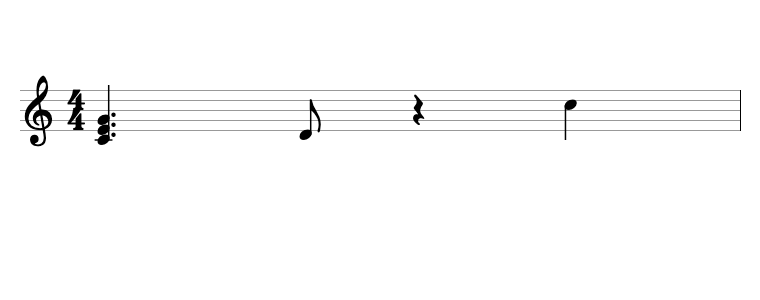
Mix sounding notes and rests of different lengths on a staff.
Try in the guide ↗Explore what you can engrave with VexFlow, from your first bar of music to a full conductor’s score.
Staff notation
Read two hands together across a braced pair of staves. The opening of Chopin’s Ballade No. 3 shows the treble and bass parts in context.
View full example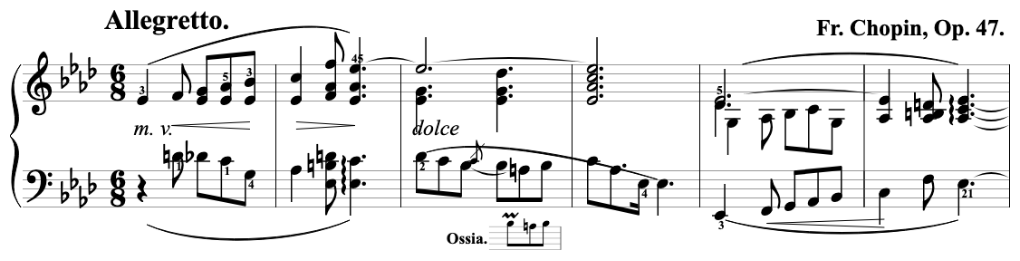
The signs that establish pitch, duration, and the shape of a bar.
Mix sounding notes and rests of different lengths on a staff.
Try in the guide ↗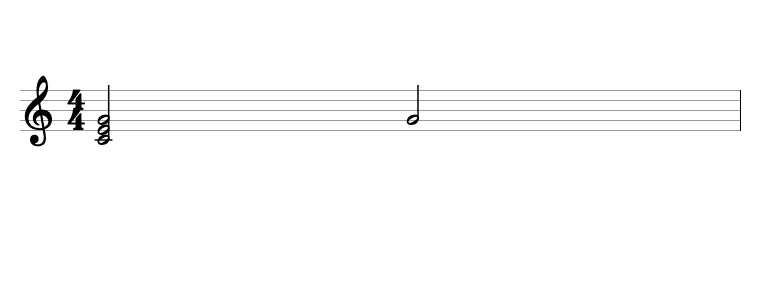
Stack several pitches on one stem and move between chords and single notes.
Try in the guide ↗
Choose the pitch reference for a staff, from treble and bass to the movable C clefs.
Try in the guide ↗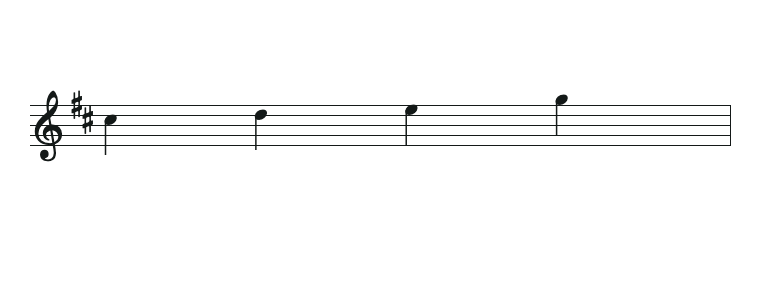
Set the sharps or flats at the start of a staff to establish the key.
Try in the guide ↗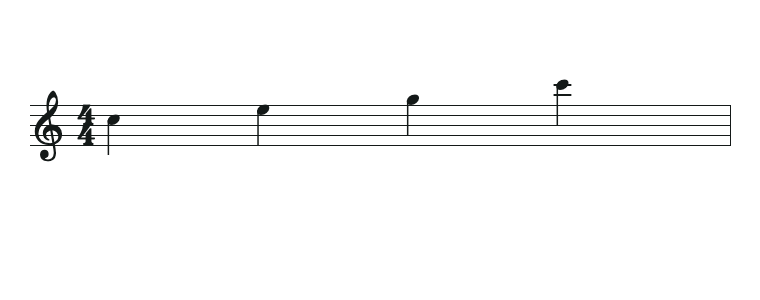
Show how beats are grouped in a bar with a numeric or symbolic meter.
Try in the guide ↗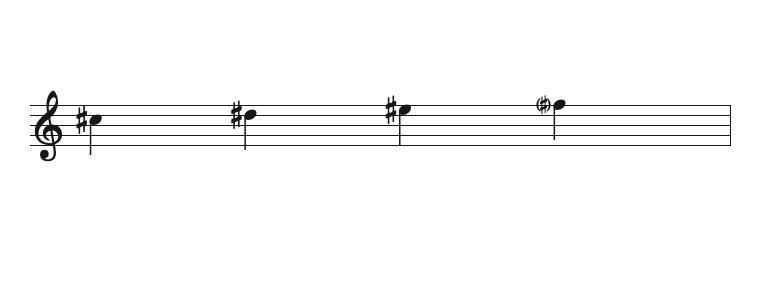
Attach sharp, flat, and natural signs to individual pitches, including pitches inside a chord.
Try in the guide ↗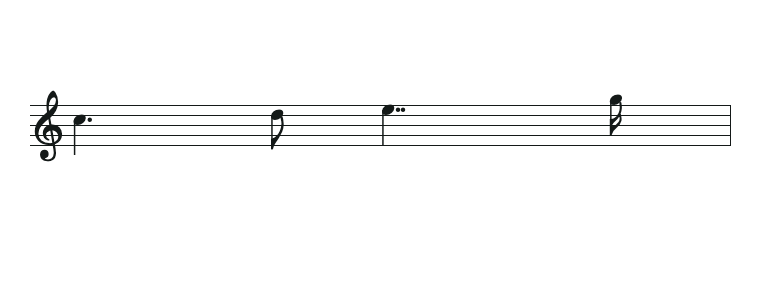
Extend a note or rest by half its value with a dot beside the head.
Try in the guide ↗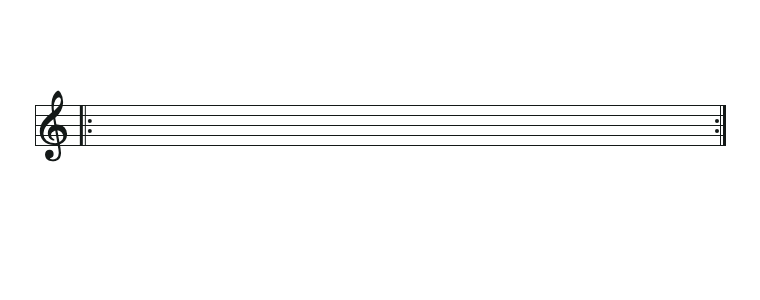
Divide measures, mark the final bar, or send the reader back to a repeat.
Try in the guide ↗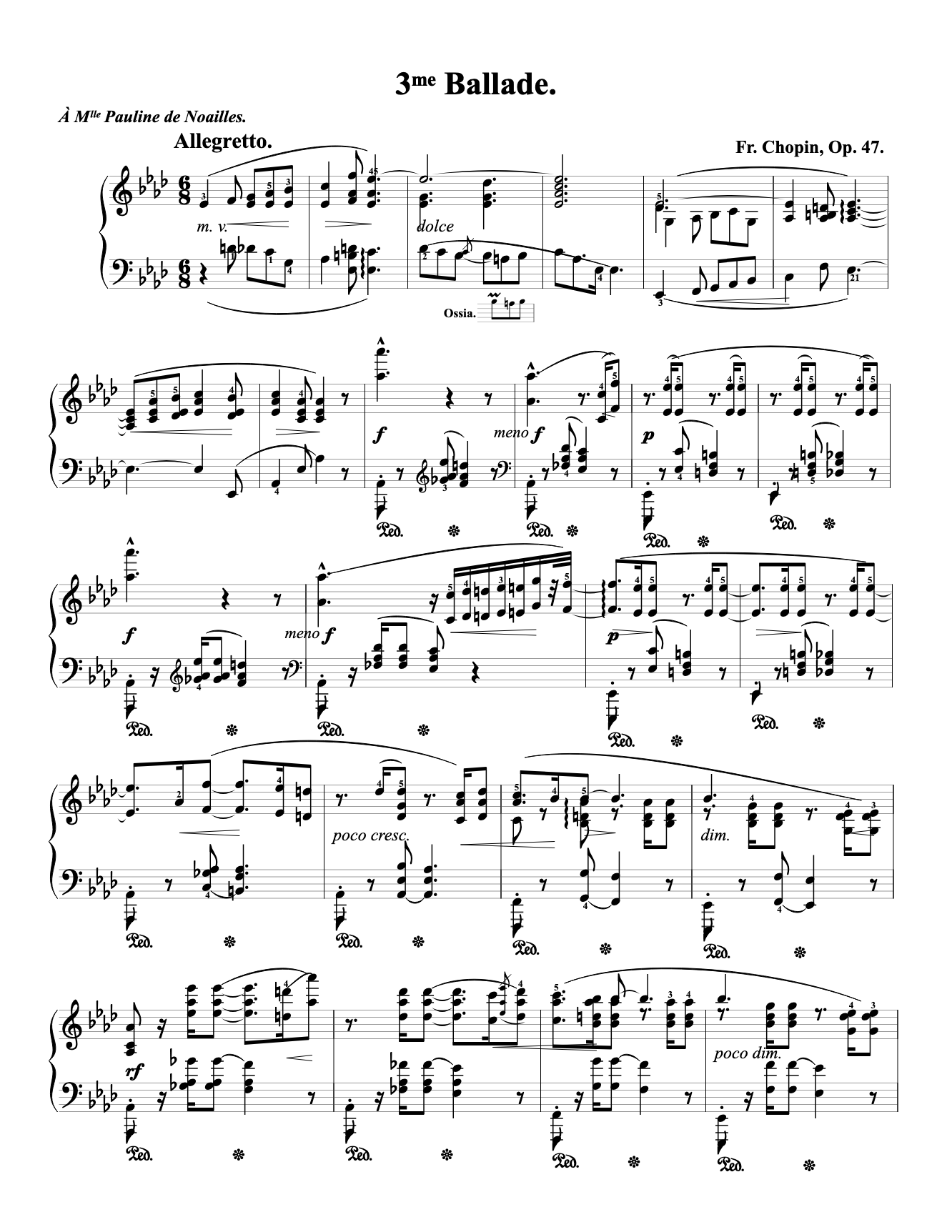
Read two hands together across a braced pair of staves. The opening of Chopin’s Ballade No. 3 shows the treble and bass parts in context.
View report exhibit ↗Group the beat, layer independent parts, and show how notes fit in time.
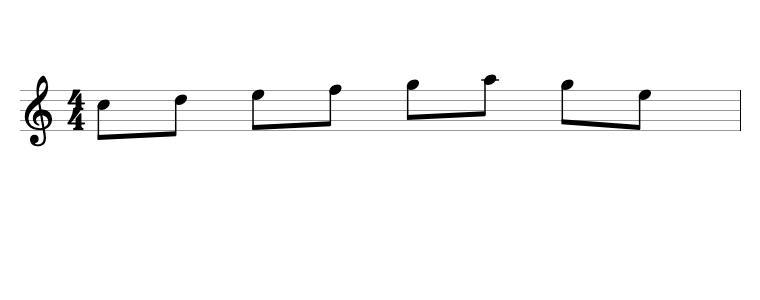
Join short notes into groups that make the beat visible.
Try in the guide ↗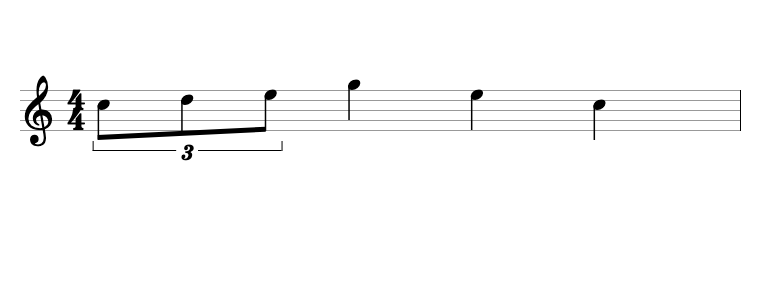
Fit three evenly spaced notes into the time of two, or specify another ratio.
Try in the guide ↗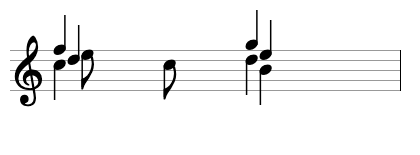
Give simultaneous lines their own rhythms and stem directions on a shared staff.
View report exhibit ↗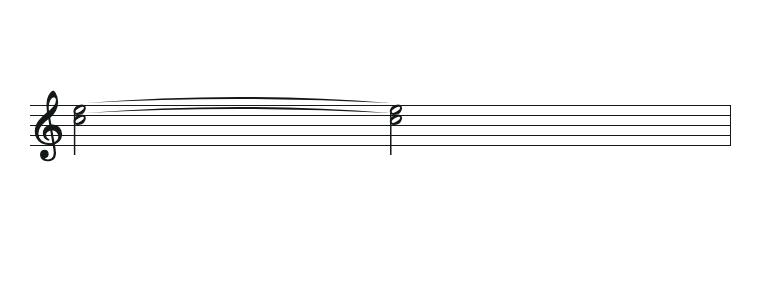
Connect two notes of the same pitch into one sustained sound.
Try in the guide ↗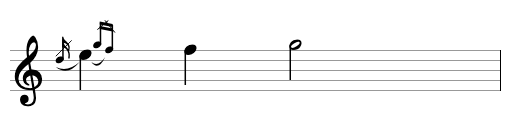
Place a small group of ornamental notes before or after a main note.
View report exhibit ↗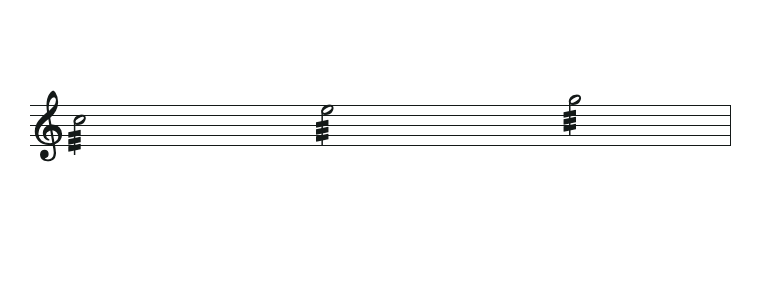
Mark rapid reiteration with strokes through a stem.
Try in the guide ↗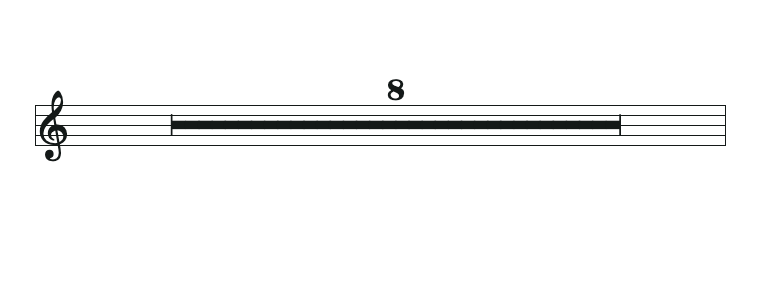
Show several silent measures as one rest with a bar count.
Try in the guide ↗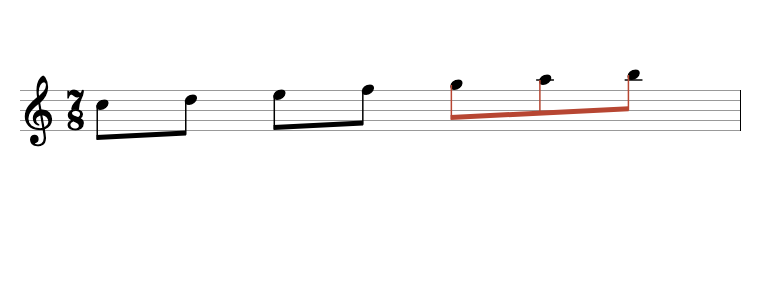
Beam a seven-eighths bar in groups of two, two, and three.
Try in the guide ↗Tell the player how to shape an attack, a sustained note, or a whole phrase.
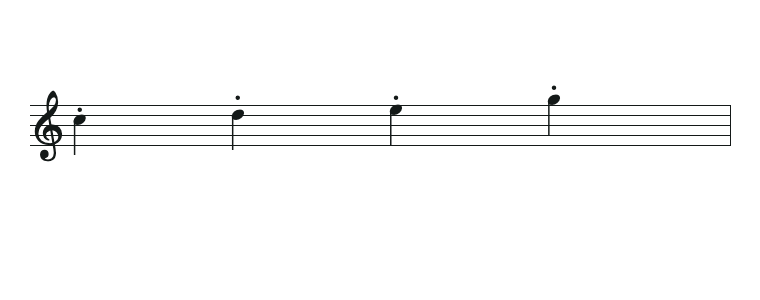
Place signs for accents, staccato, and other attacks above or below notes.
Try in the guide ↗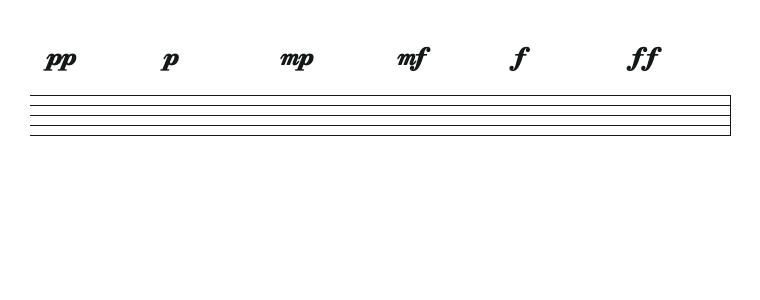
Set loudness with musical letterforms, from piano to forte.
Try in the guide ↗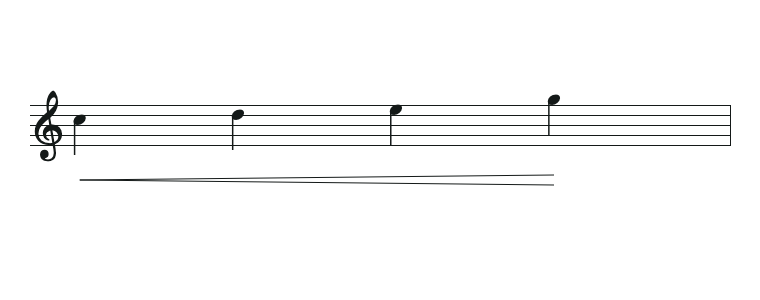
Carry a crescendo or diminuendo across a passage with an opening or closing wedge.
Try in the guide ↗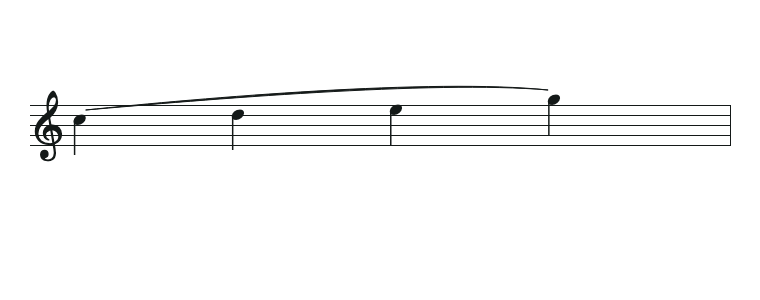
Join different pitches with a curve to show the span of a legato phrase.
Try in the guide ↗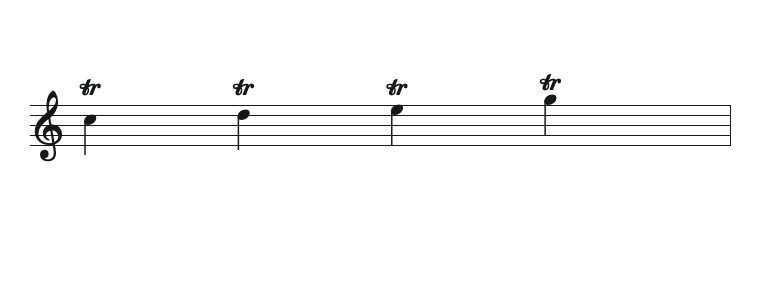
Place an ornament over its host note and add auxiliary accidentals.
Try in the guide ↗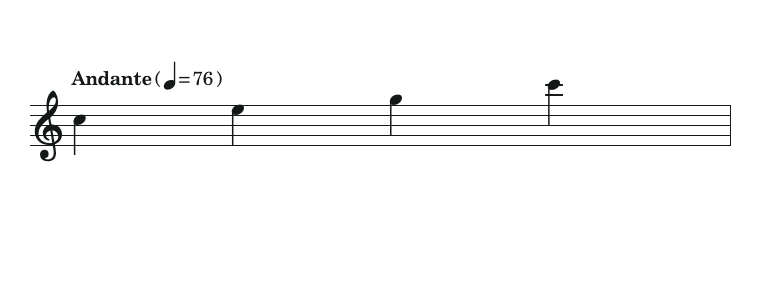
Introduce a passage with a metronome value or an expression such as Allegro.
Try in the guide ↗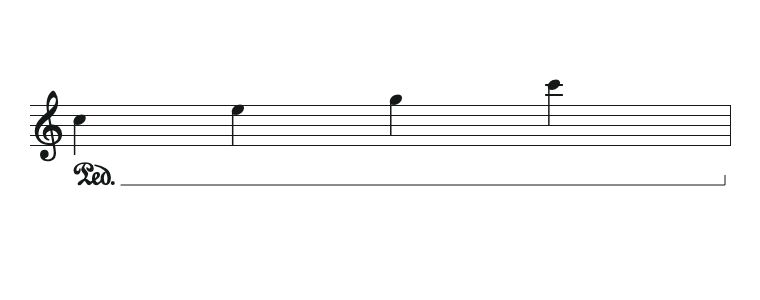
Show where the pianist presses, changes, and lifts the sustain pedal.
Try in the guide ↗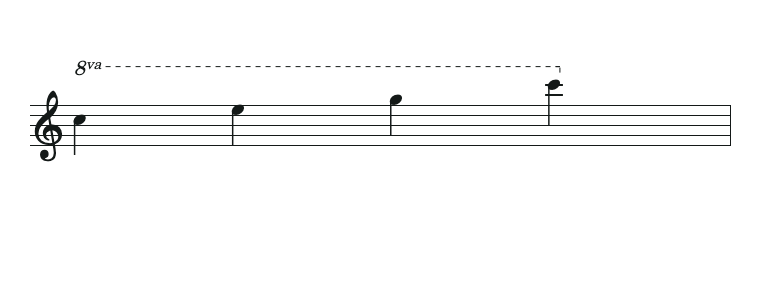
Move a written passage up or down an octave using a labeled continuation line.
Try in the guide ↗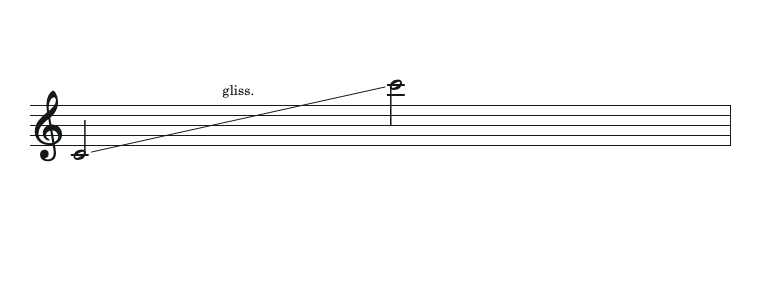
Draw a pitched slide between selected notes or chord heads.
Try in the guide ↗Put words, chord changes, and rehearsal directions where performers read them.
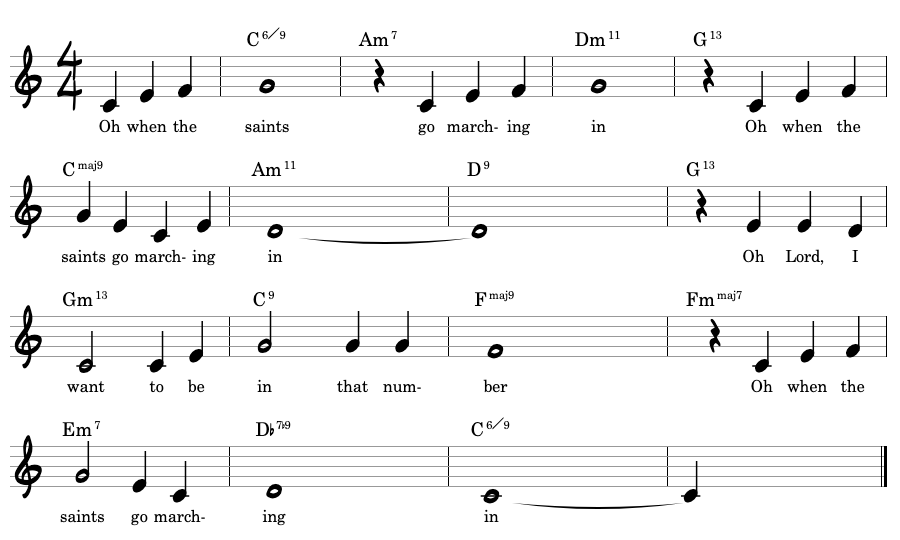
Give the melody, lyrics, and chord changes together. This setting of “When the Saints Go Marching In” uses the handwritten Petaluma music font.
View report exhibit ↗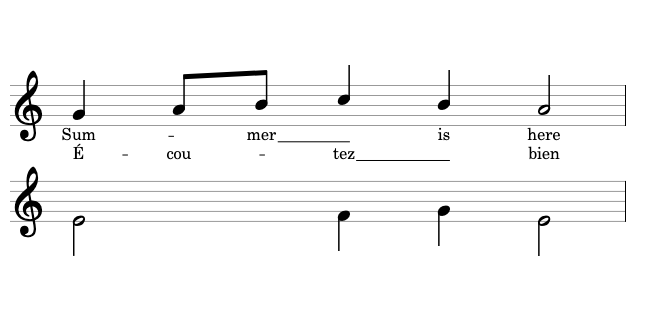
Align syllables to their notes in separate verse rows, with hyphens and extenders through longer phrases.
View report exhibit ↗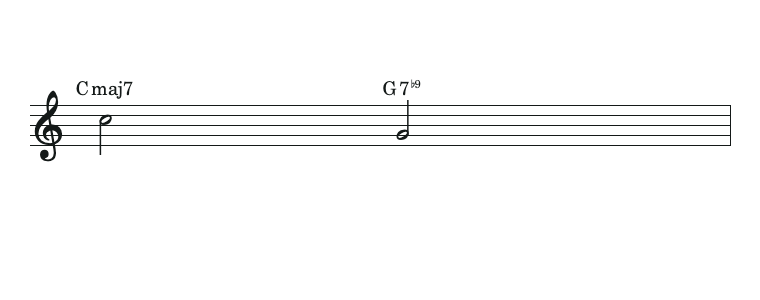
Set chord roots, extensions, and alterations above the staff with aligned superscripts.
Try in the guide ↗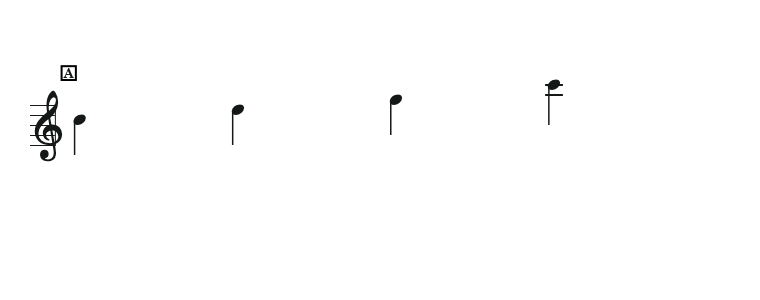
Give an ensemble a named place to start with a letter or number above the system.
Try in the guide ↗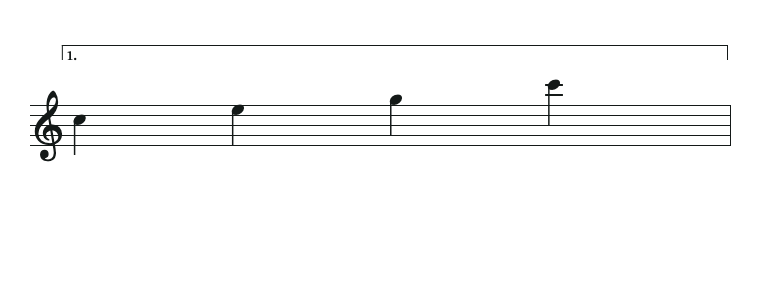
Label first and second endings with volta brackets over the relevant measures.
Try in the guide ↗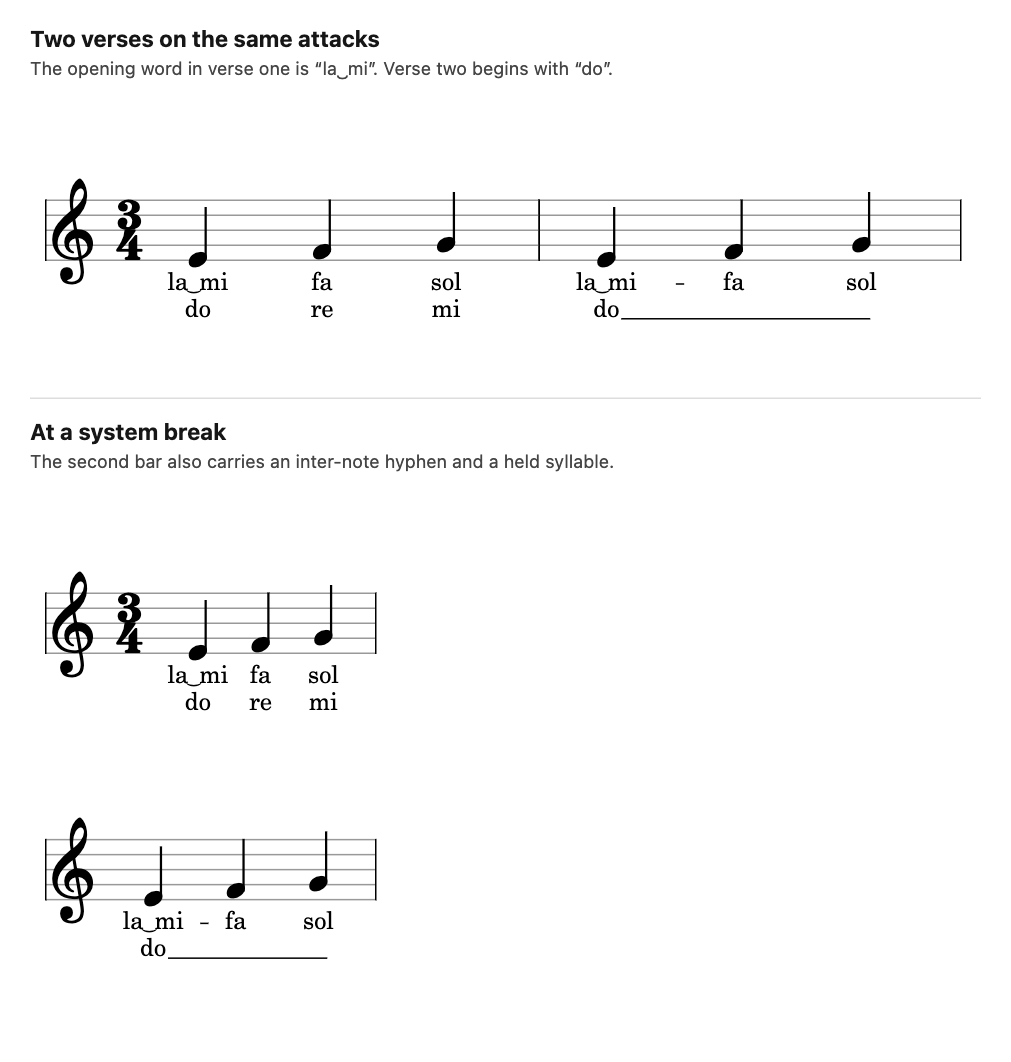
Set two syllables under one attack and connect them with an undertie.
View report exhibit ↗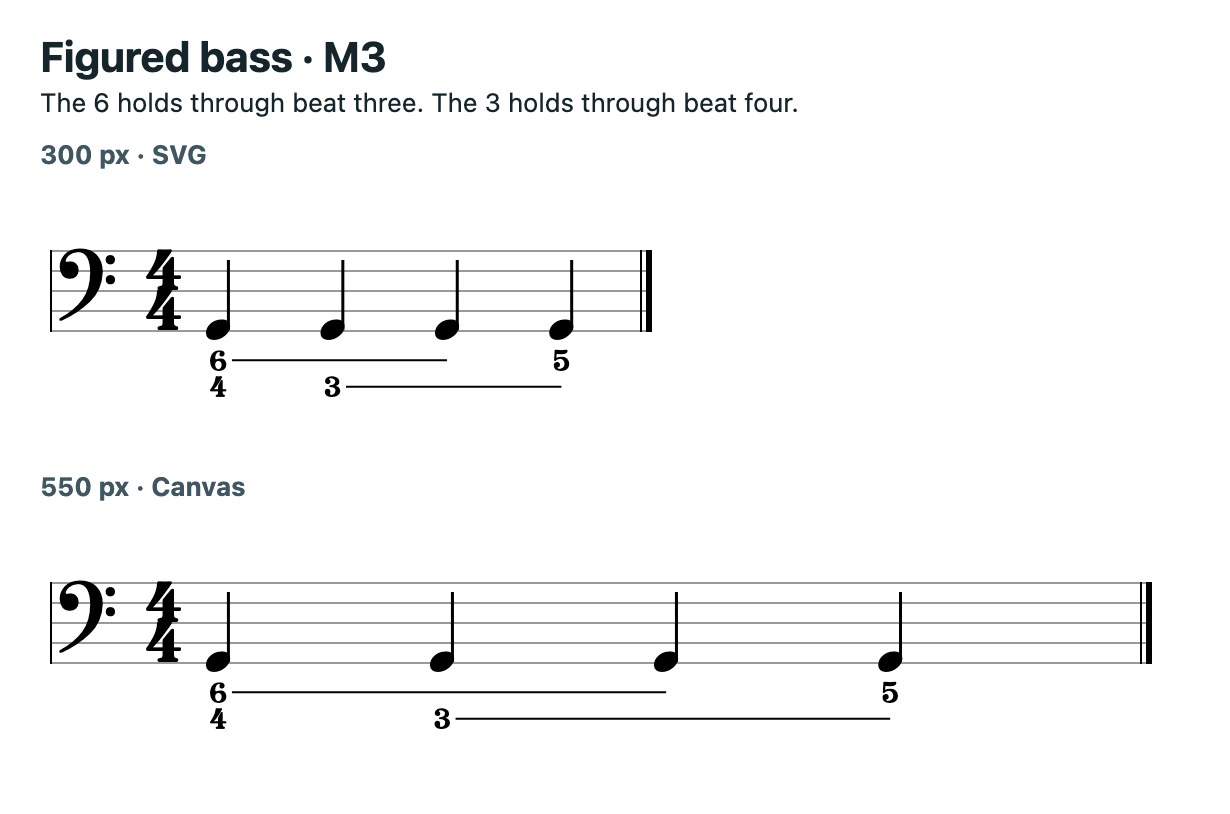
Stack intervals below the bass note and let each figure’s continuation line end independently.
See engraving notes ↗Write for strings, frets, and drum kits in the notation each player expects.
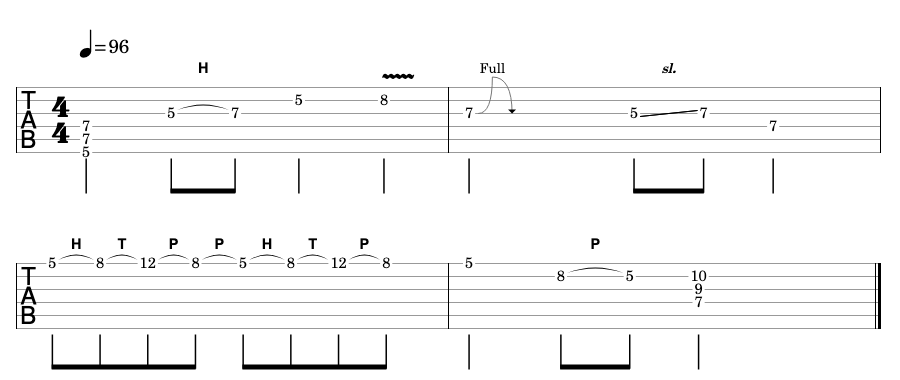
Read fret numbers on the strings and the picking rhythm underneath. High Wire marks hammer-ons, taps, pull-offs, and a full bend.
View report exhibit ↗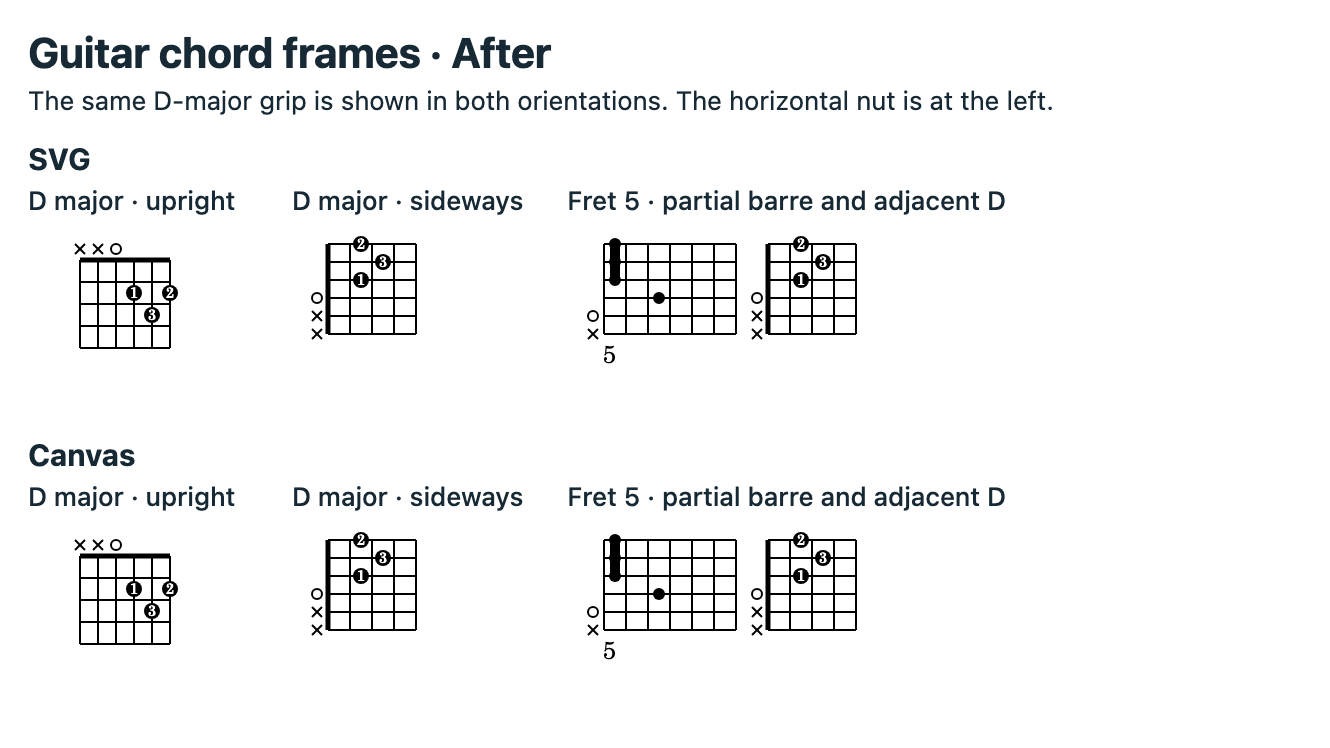
Rotate a chord diagram so the highest string sits at the top. Follow the open strings, mutes and partial barre in the same grip.
See engraving notes ↗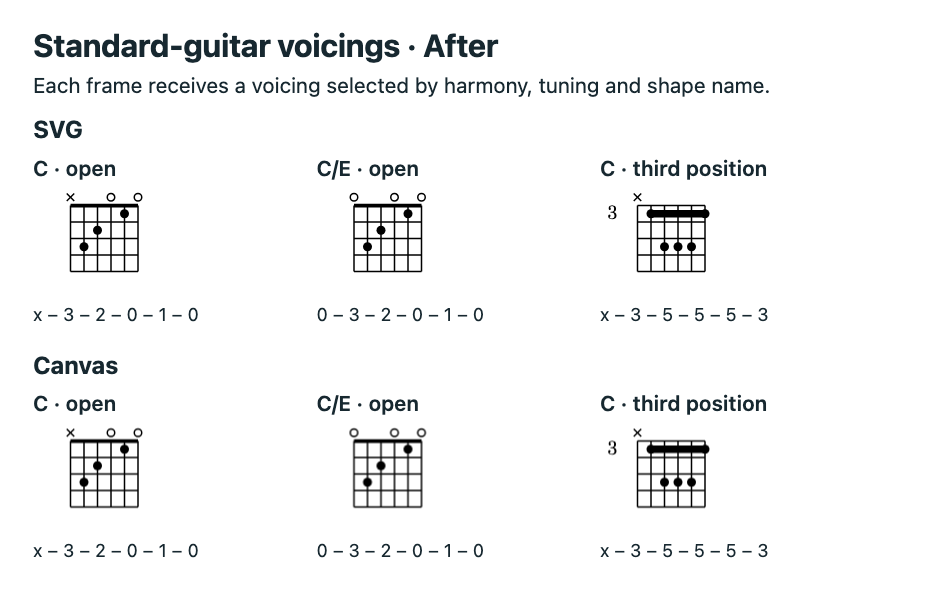
Look up open C and C/E by chord name and tuning. The slash bass changes which strings sound.
See engraving notes ↗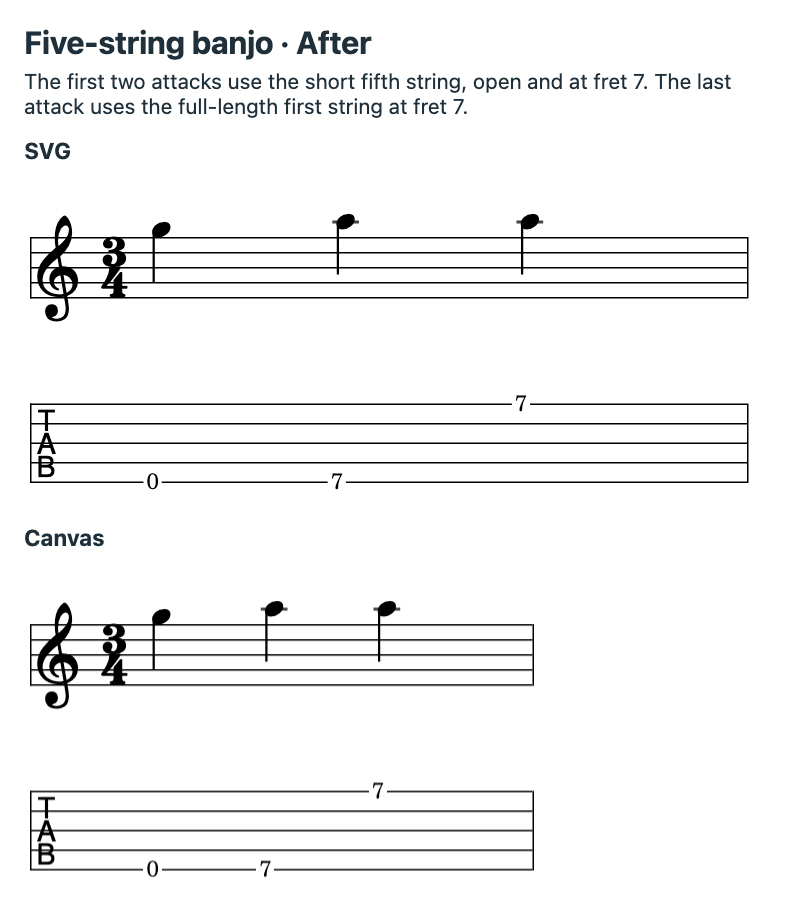
Read the short fifth string as a drone. Its open G and the note at fret seven are a whole tone apart.
See engraving notes ↗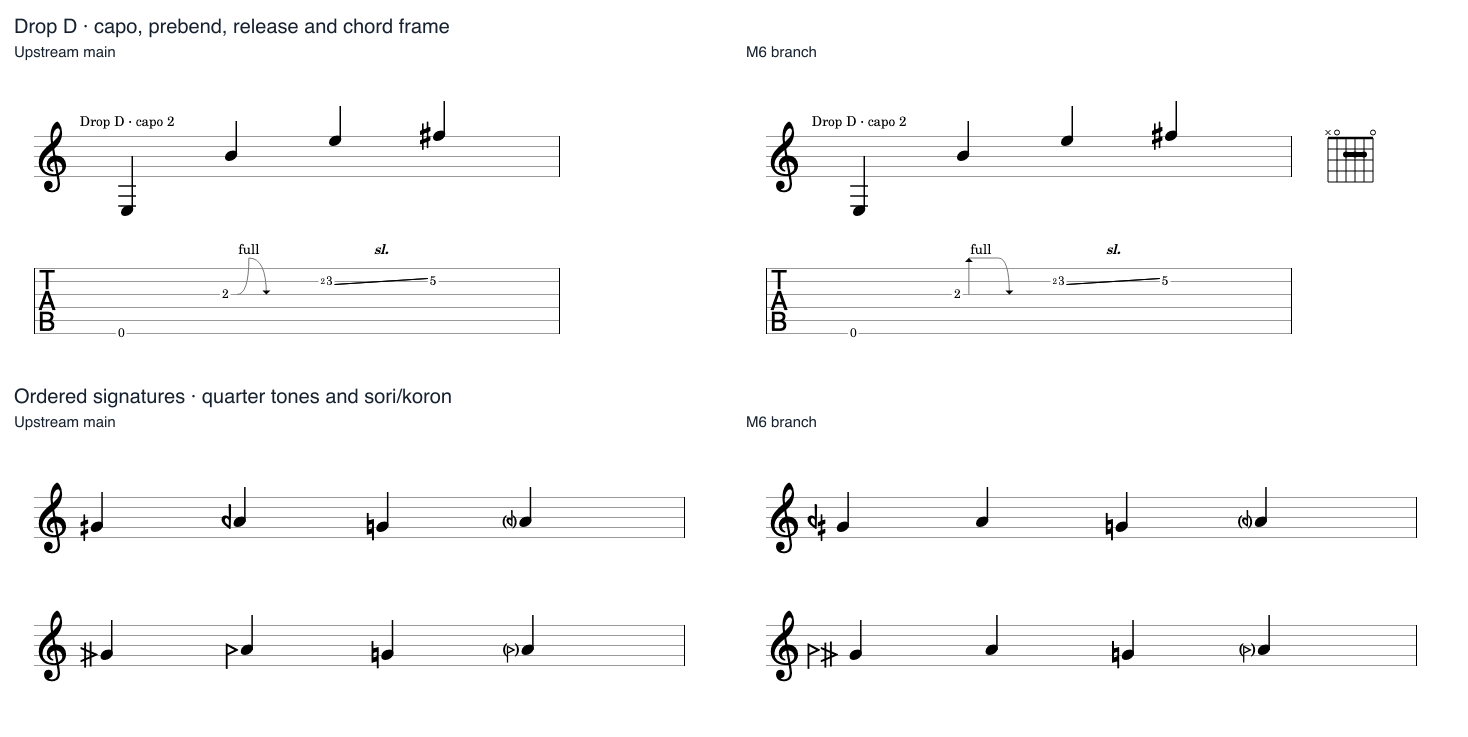
Show the chord shape alongside the written notes and tab. The grid identifies the string and fret for each stopped note.
View report exhibit ↗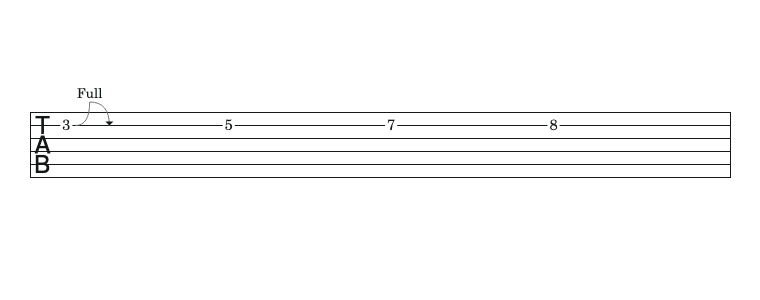
Show the starting fret and how far a guitarist bends the string.
Try in the guide ↗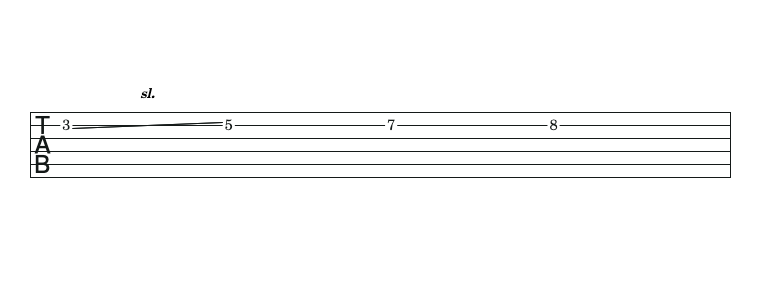
Join fret numbers to show movement along a string.
Try in the guide ↗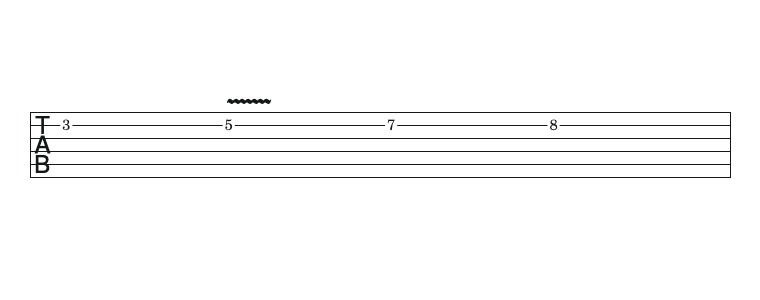
Place a wavy line beside a fret to indicate vibrato.
Try in the guide ↗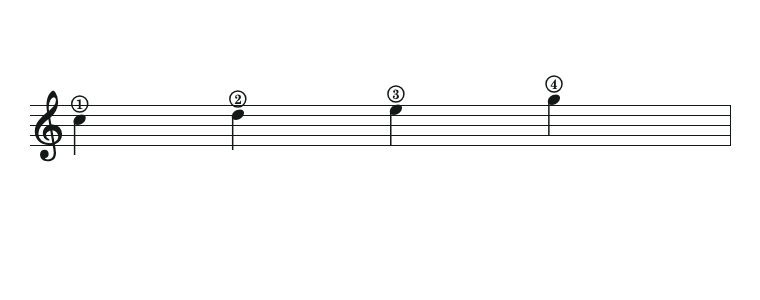
Identify the string used for a passage with a circled number and a continuation line.
Try in the guide ↗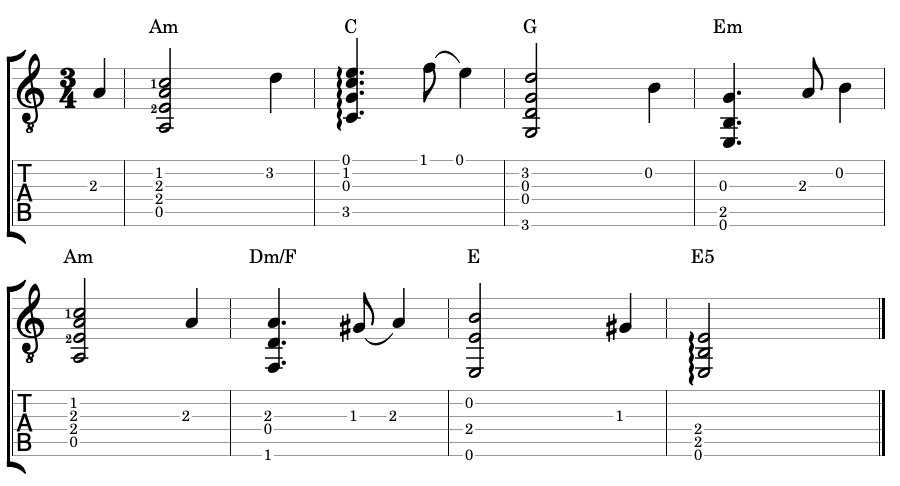
Set the melody and its accompaniment together on guitar, with chord names for harmonic context.
View report exhibit ↗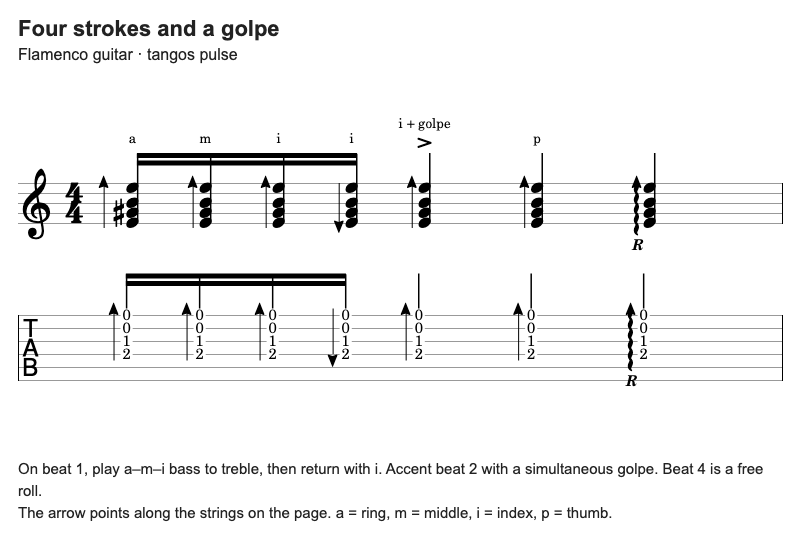
Show the direction and finger sequence of a rasgueado alongside a golpe tap.
View report exhibit ↗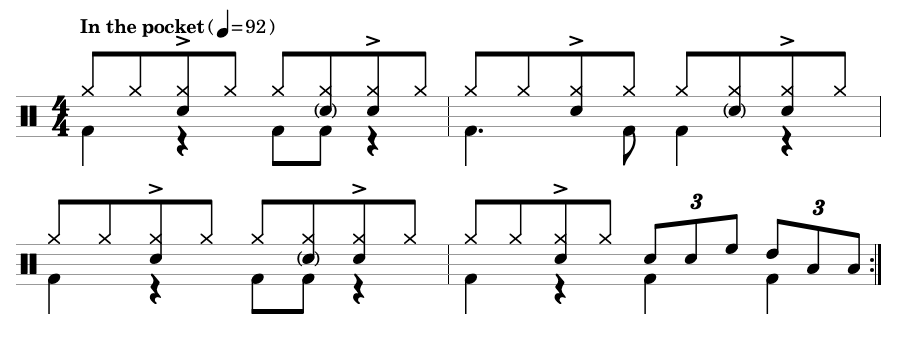
Distinguish kit pieces by staff position and notehead. Pocket Change combines kick, snare, and hi-hat in one groove.
View report exhibit ↗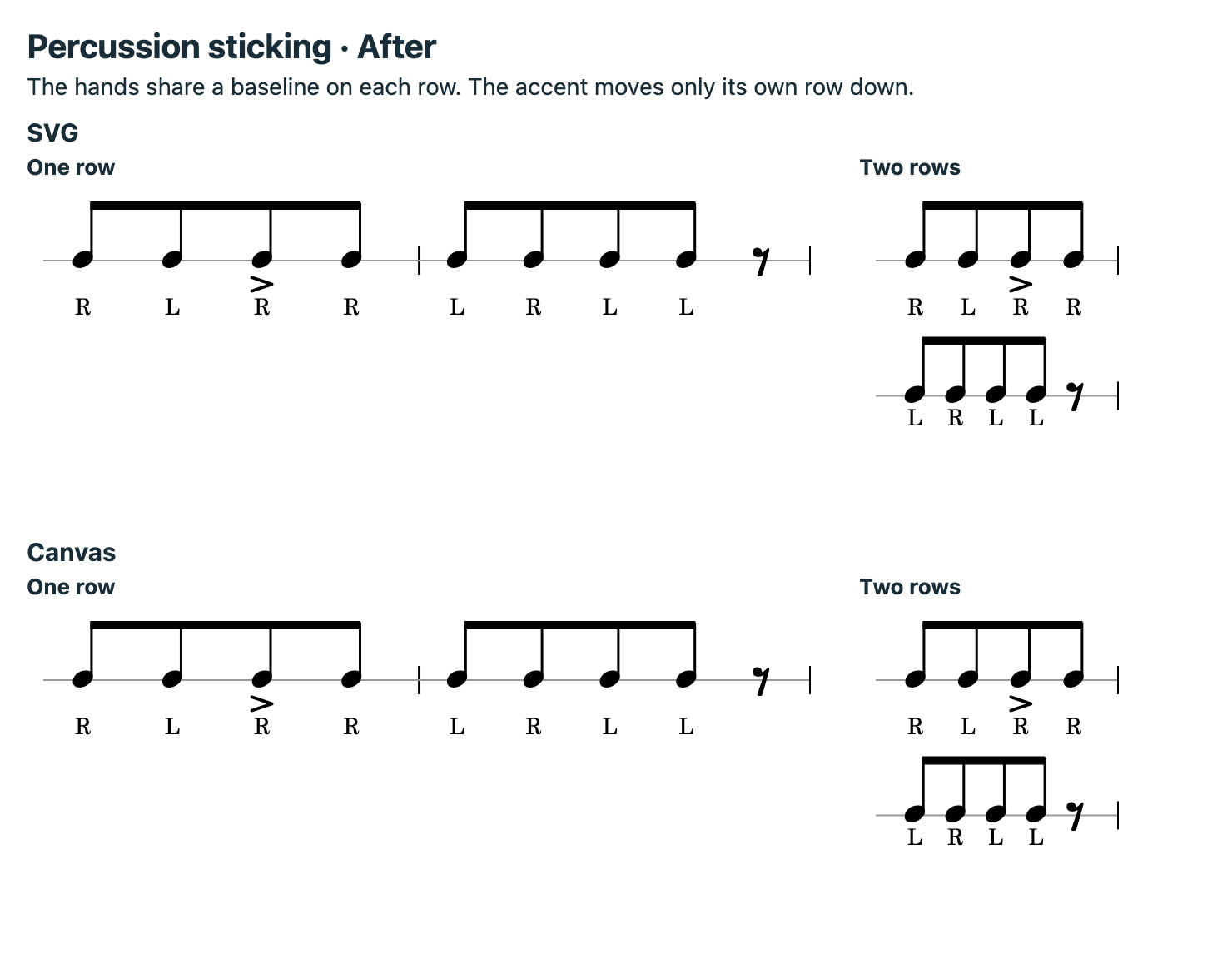
Line up right- and left-hand strokes with their attacks and carry the pattern onto a new system.
See engraving notes ↗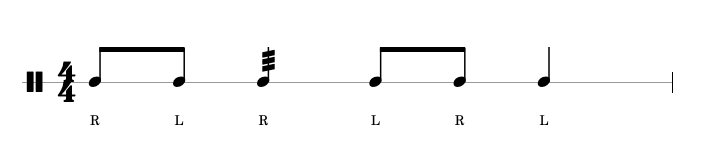
Set an unpitched side-drum part on one staff line.
View report exhibit ↗Move from individual measures to a responsive score, an extracted part, or a printed edition.
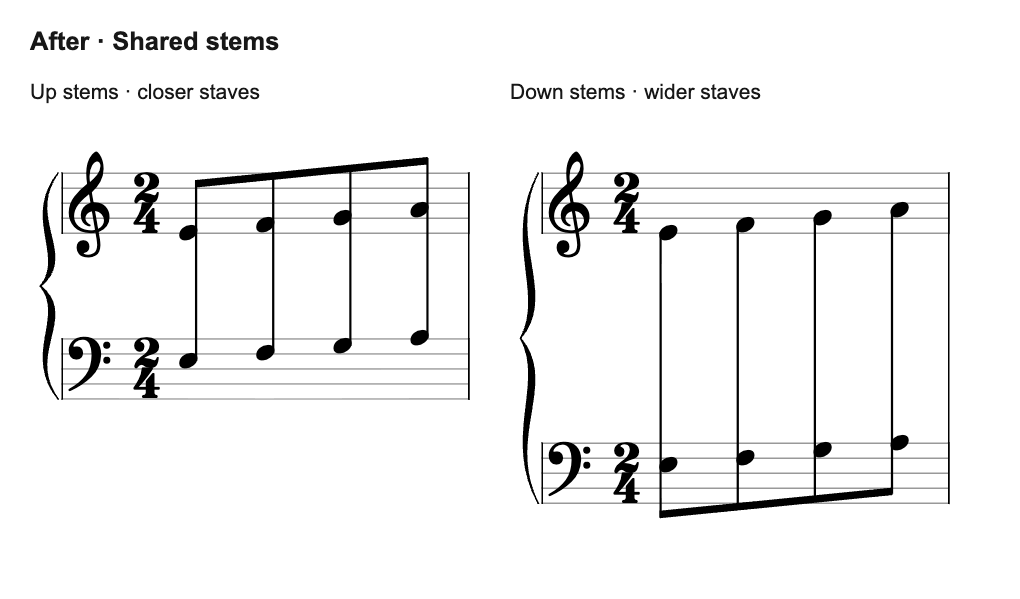
Split a chord between the two piano staves while keeping a shared stem under its beam.
View report exhibit ↗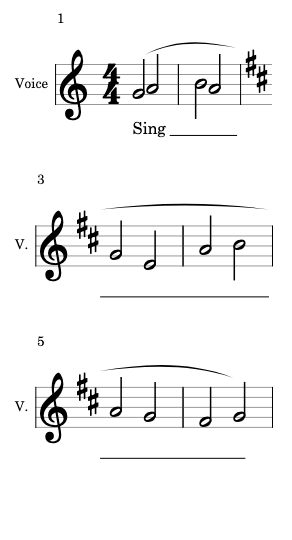
Reflow measures to a narrower width and continue musical phrases onto the next line.
View report exhibit ↗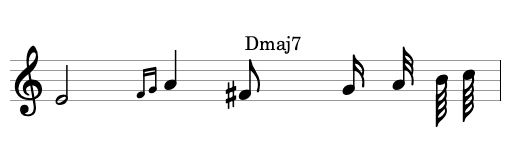
Allow space for the ink around notes while keeping short attacks readable.
View report exhibit ↗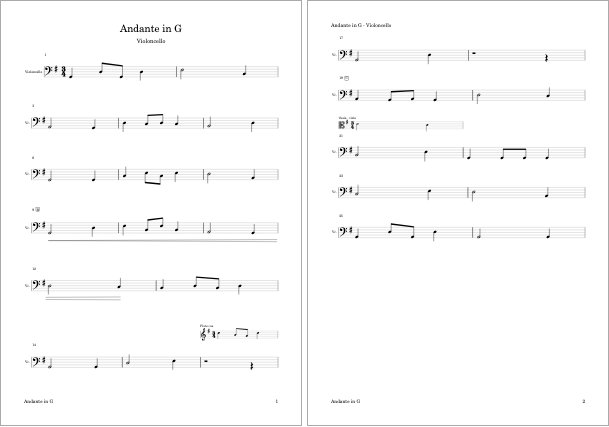
Lay out an individual player’s music with its own rests, systems, and page turns.
View report exhibit ↗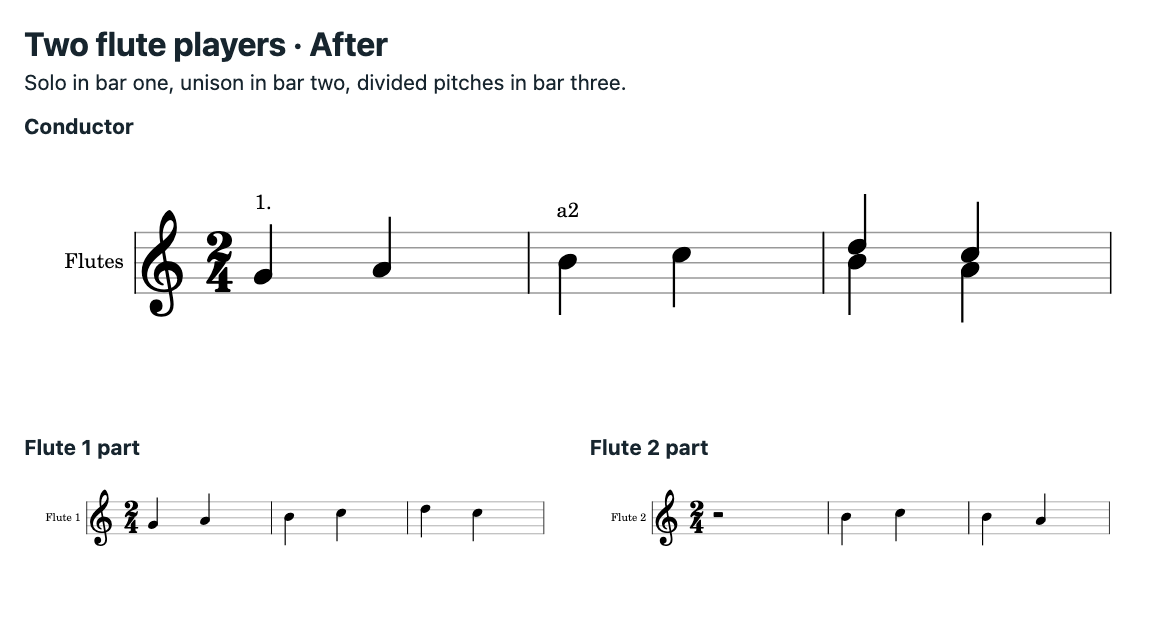
Bring two players onto one conductor staff. Solo, unison, and divided passages keep their own markings.
See engraving notes ↗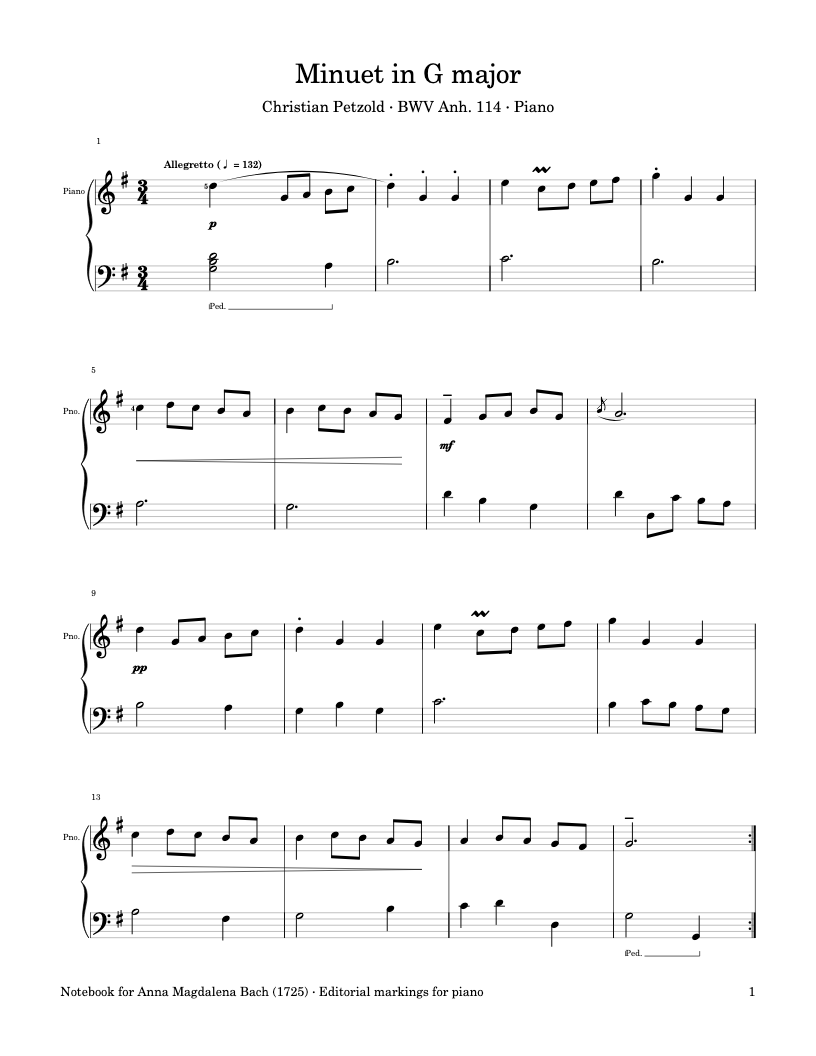
Compose a complete Letter page with a title, running text, and page numbering, as in this Minuet edition.
Read the PDF ↗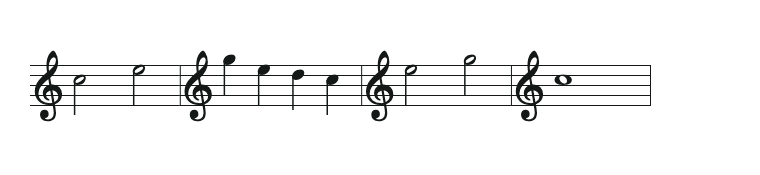
Fit a score to its display area and redraw the notation when the available space changes.
Try in the guide ↗Build, render, and navigate scores in an application.
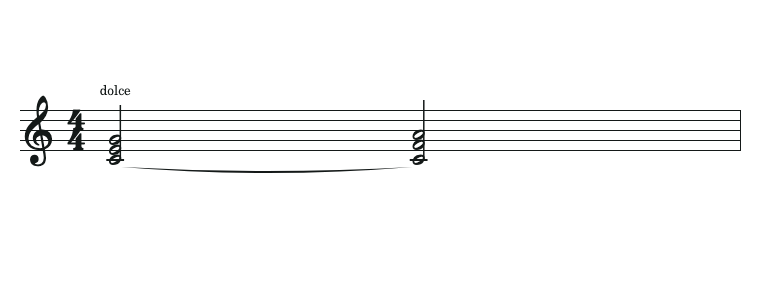
Write pitches and durations in a short text phrase, turn it into a voice, and draw it on a staff.
Try in the guide ↗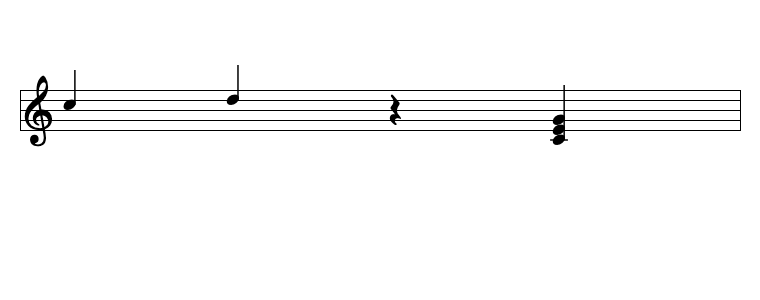
Build notes, voices, and staves individually when you need control over layout or styling.
Try in the guide ↗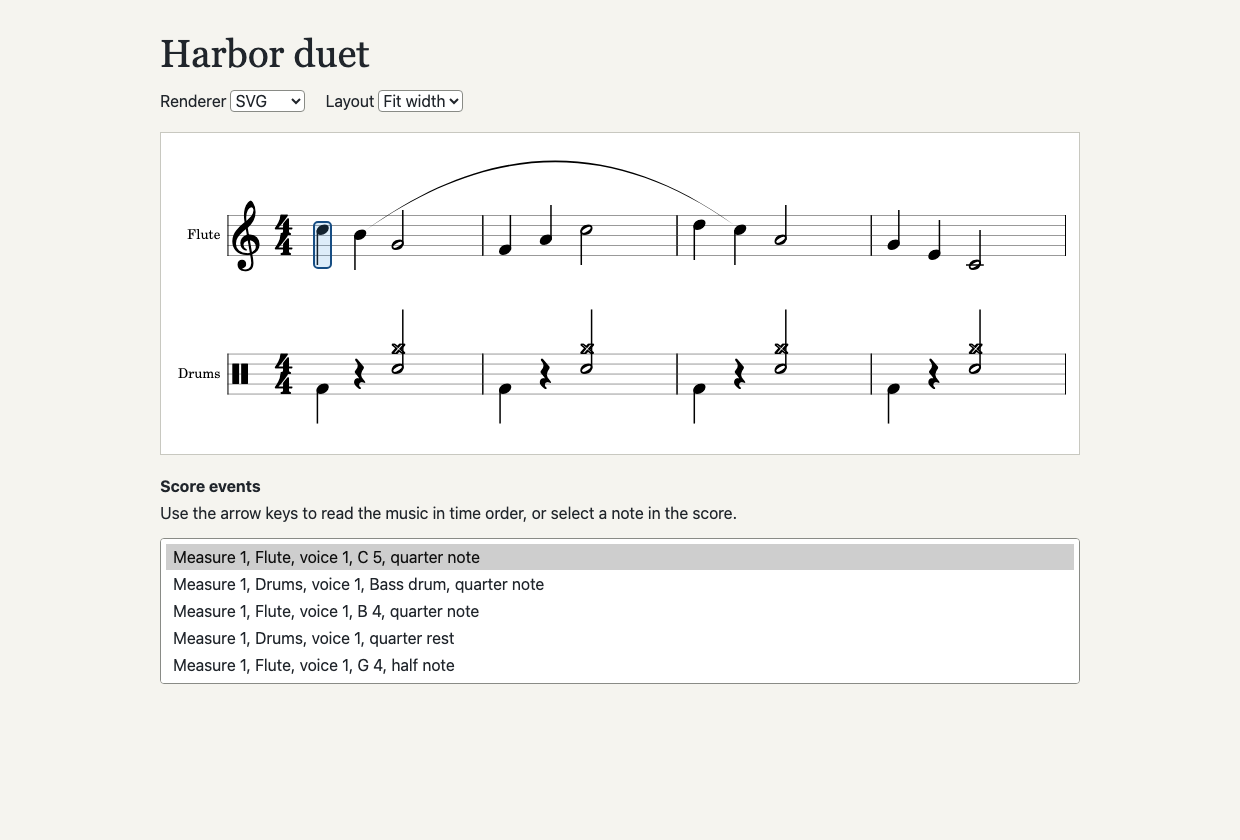
Move through the score with the keyboard and expose musical events to a screen reader.
View report exhibit ↗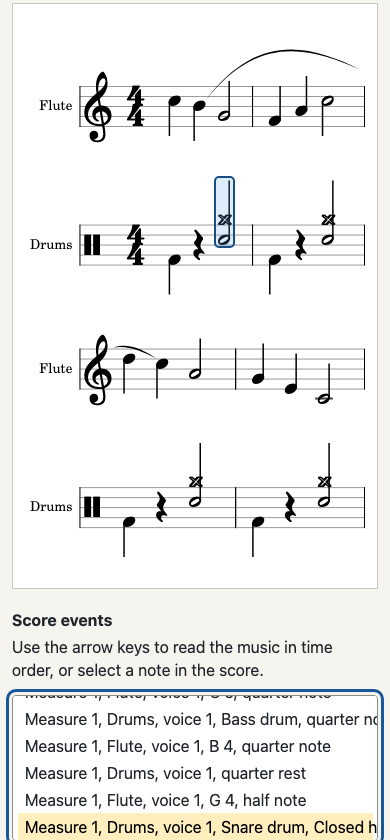
Draw notation on a canvas while retaining a navigable score reader for the music.
View report exhibit ↗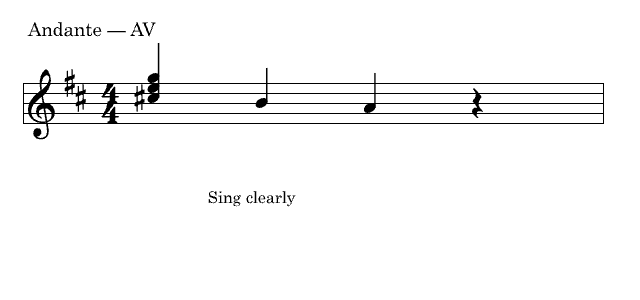
Export vector notation that keeps its glyph shapes when opened on a computer without the score fonts.
View report exhibit ↗Control pitch, rhythmic alignment, and beam shape beyond standard conventions.
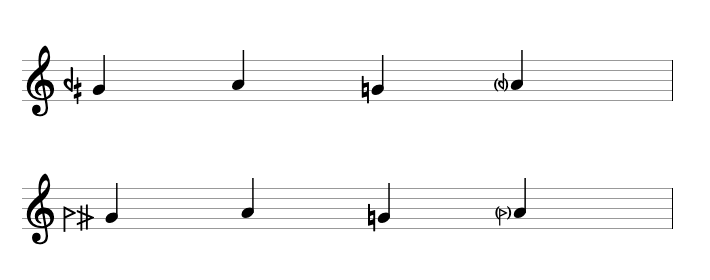
Set quarter tones and Persian accidentals directly on notes.
View report exhibit ↗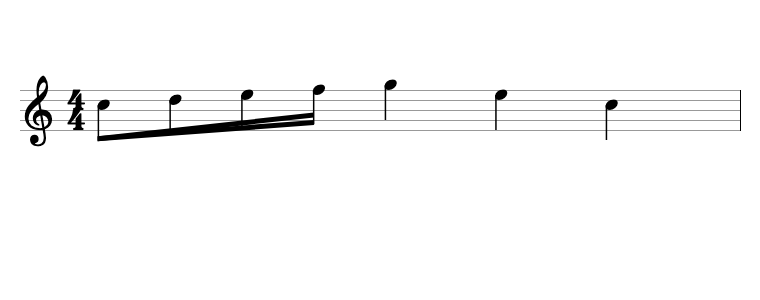
Fan a beam group out or in while retaining the written durations of its notes.
Try in the guide ↗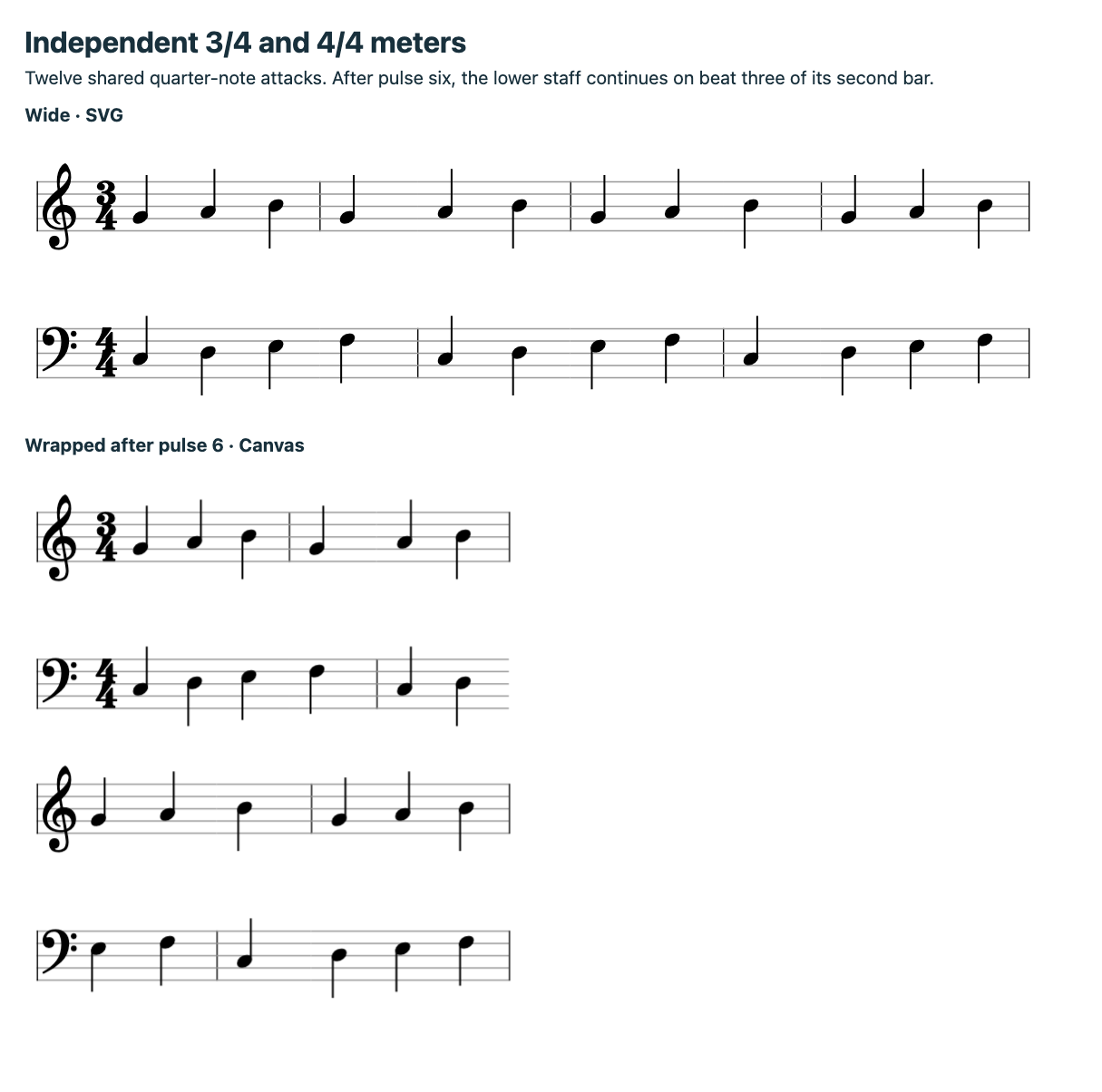
Align a staff in 3/4 with another in 4/4. Each staff retains its own barlines across the shared pulse.
See engraving notes ↗
Choose a different head shape to distinguish a sound or playing technique.
Try in the guide ↗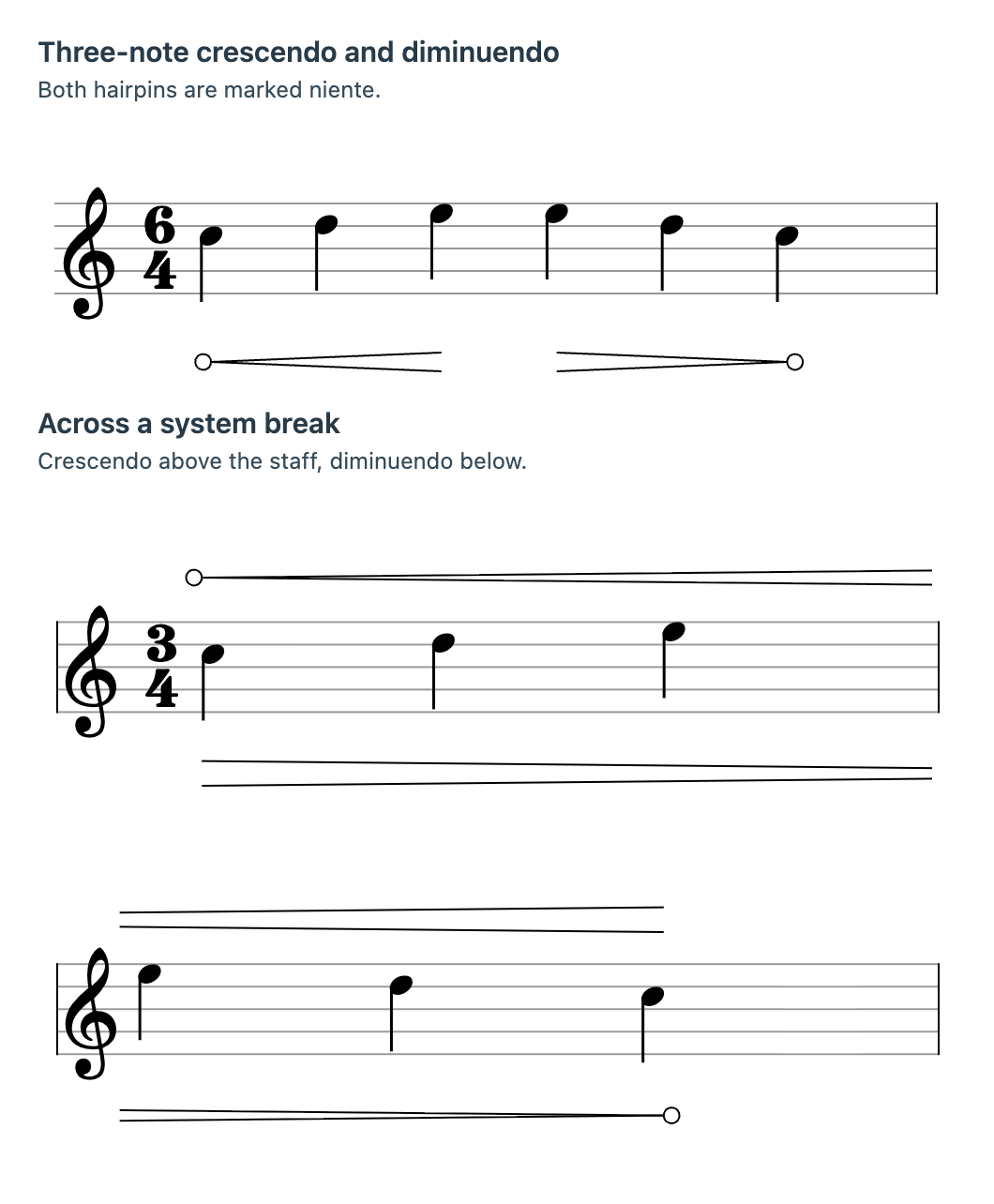
Put a small open circle at the silent end of a crescendo or diminuendo.
View report exhibit ↗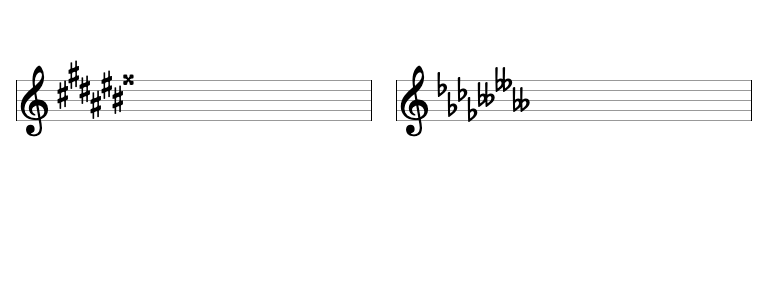
Arrange accidentals in a nonstandard key signature and carry it into the music.
View report exhibit ↗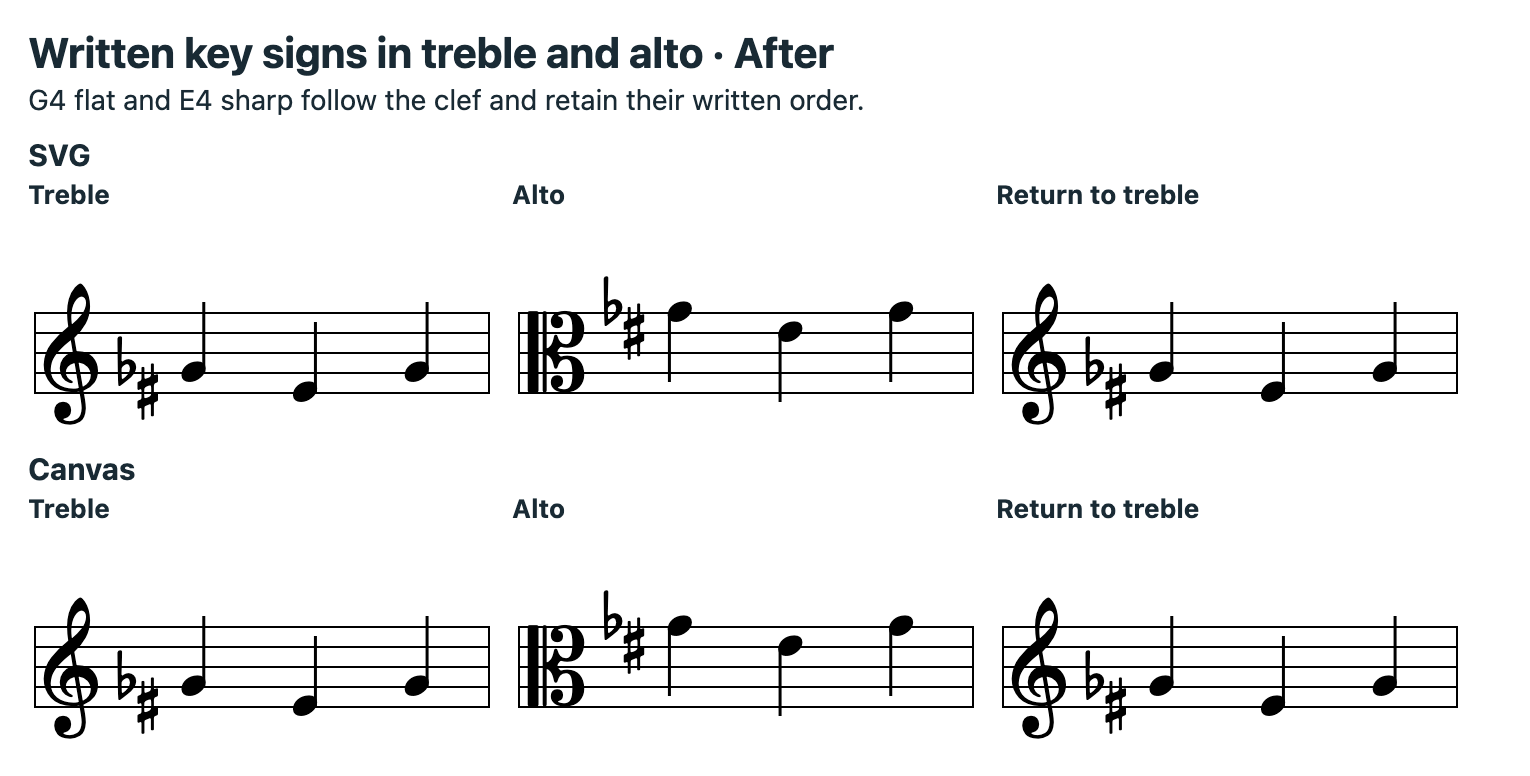
Write accidentals by pitch and keep their positions correct when the staff changes clef.
See engraving notes ↗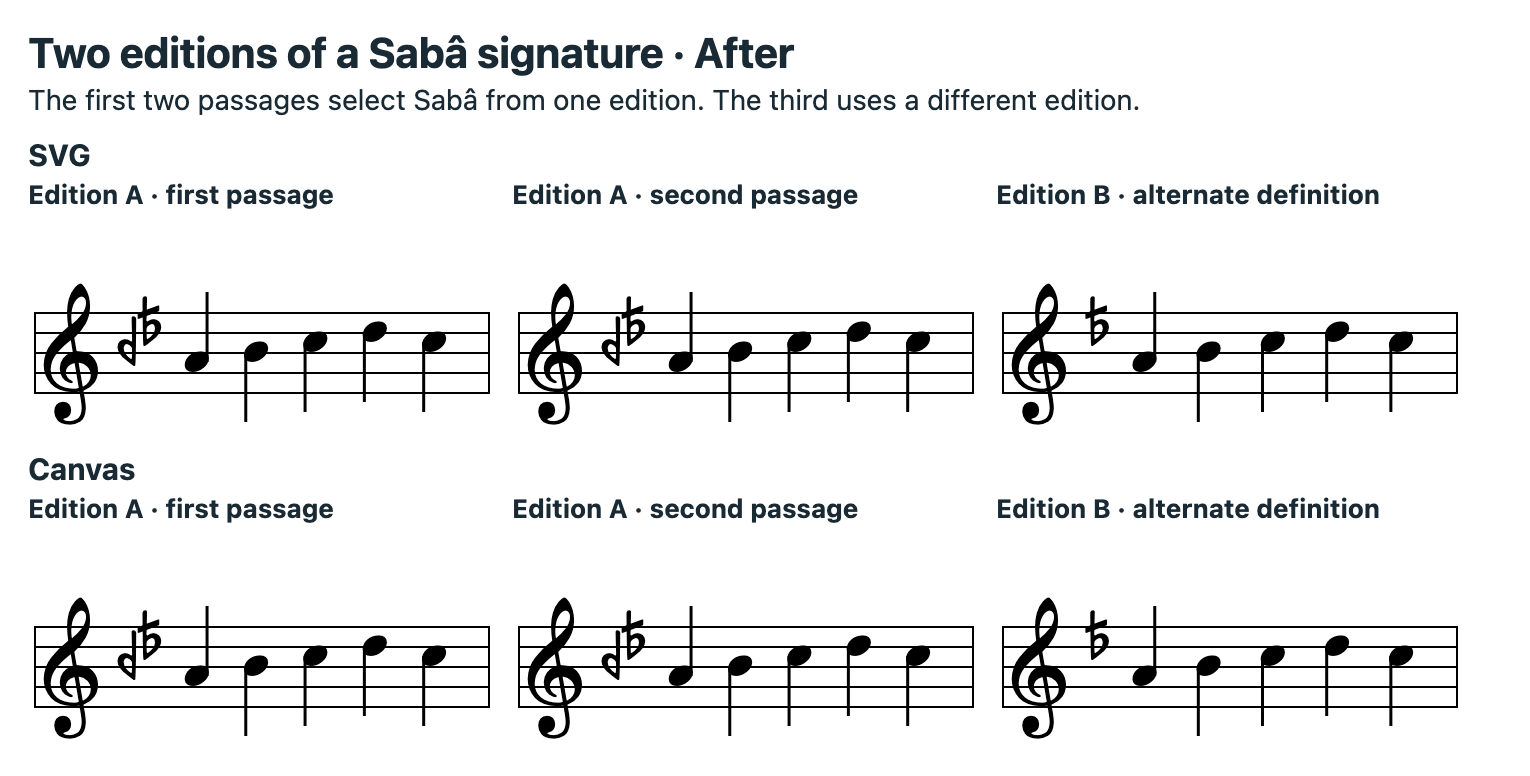
Select a named key signature from the edition’s own collection of written accidentals.
See engraving notes ↗Use instrument-specific diagrams and the reading conventions of early music.
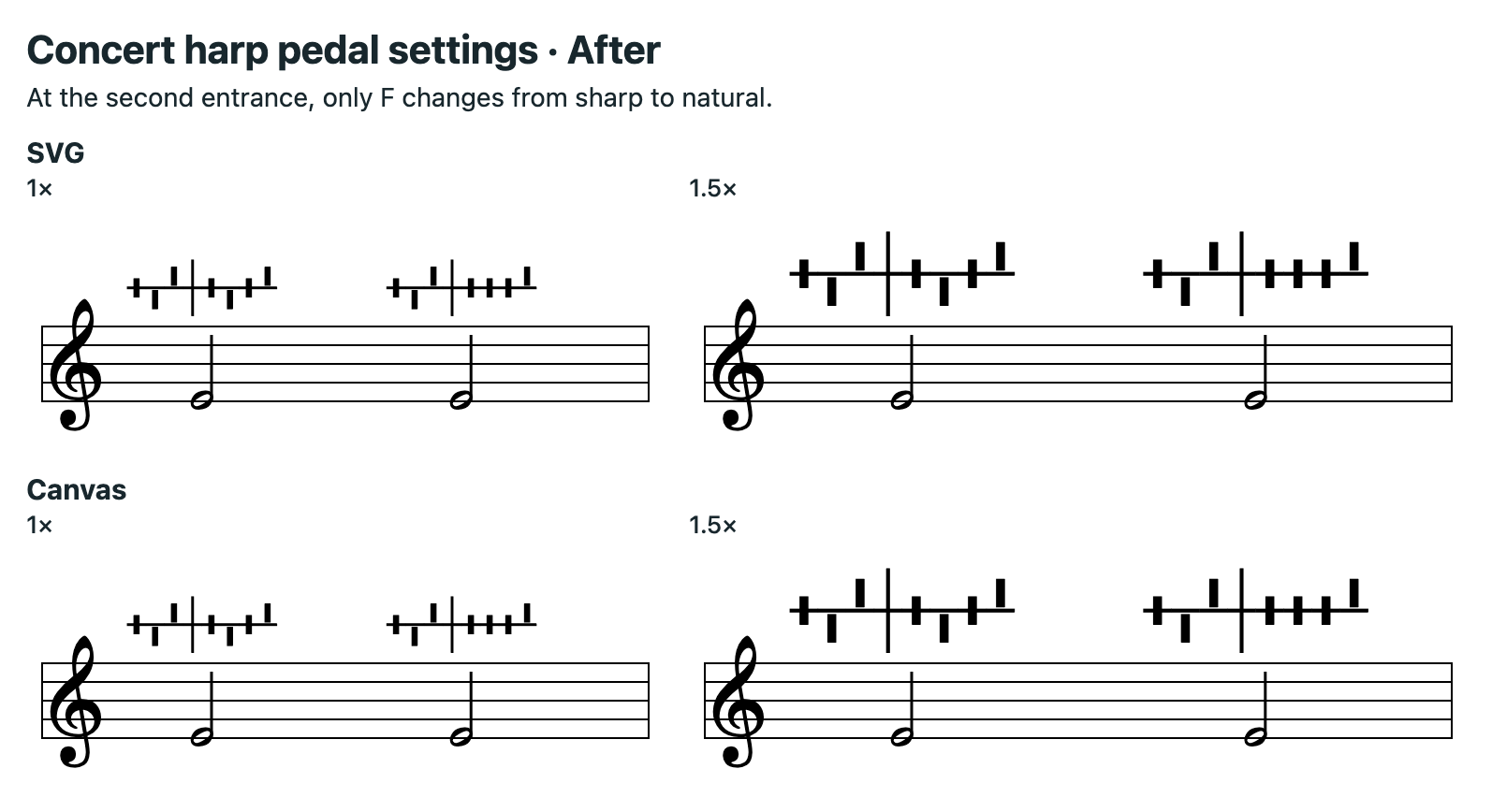
Place the seven pedals in left- and right-foot groups and show their flat, natural, or sharp settings.
See engraving notes ↗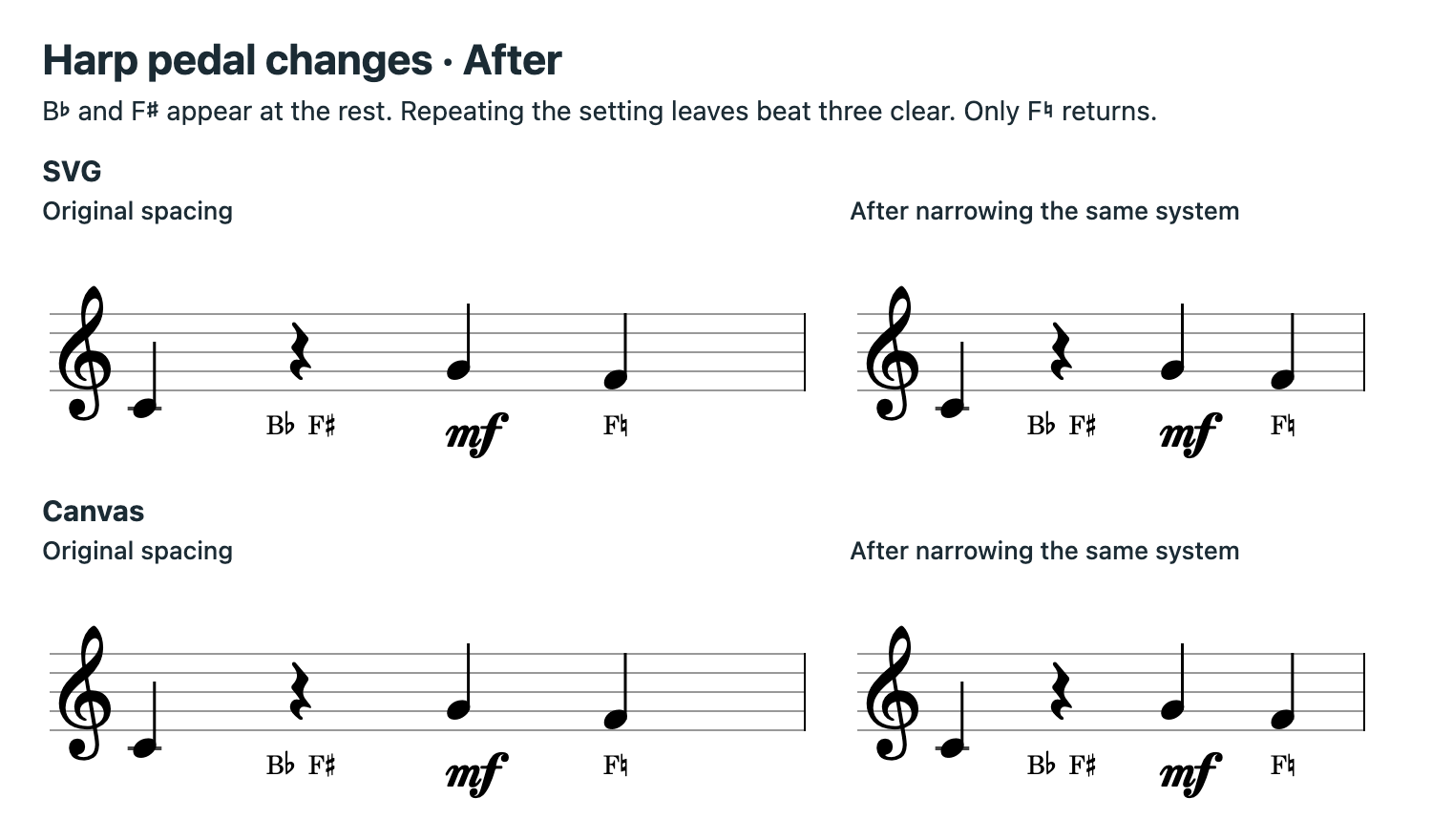
Print the pedals that move at each entrance. The harpist can read B-flat and F-sharp together, then a single F-natural.
See engraving notes ↗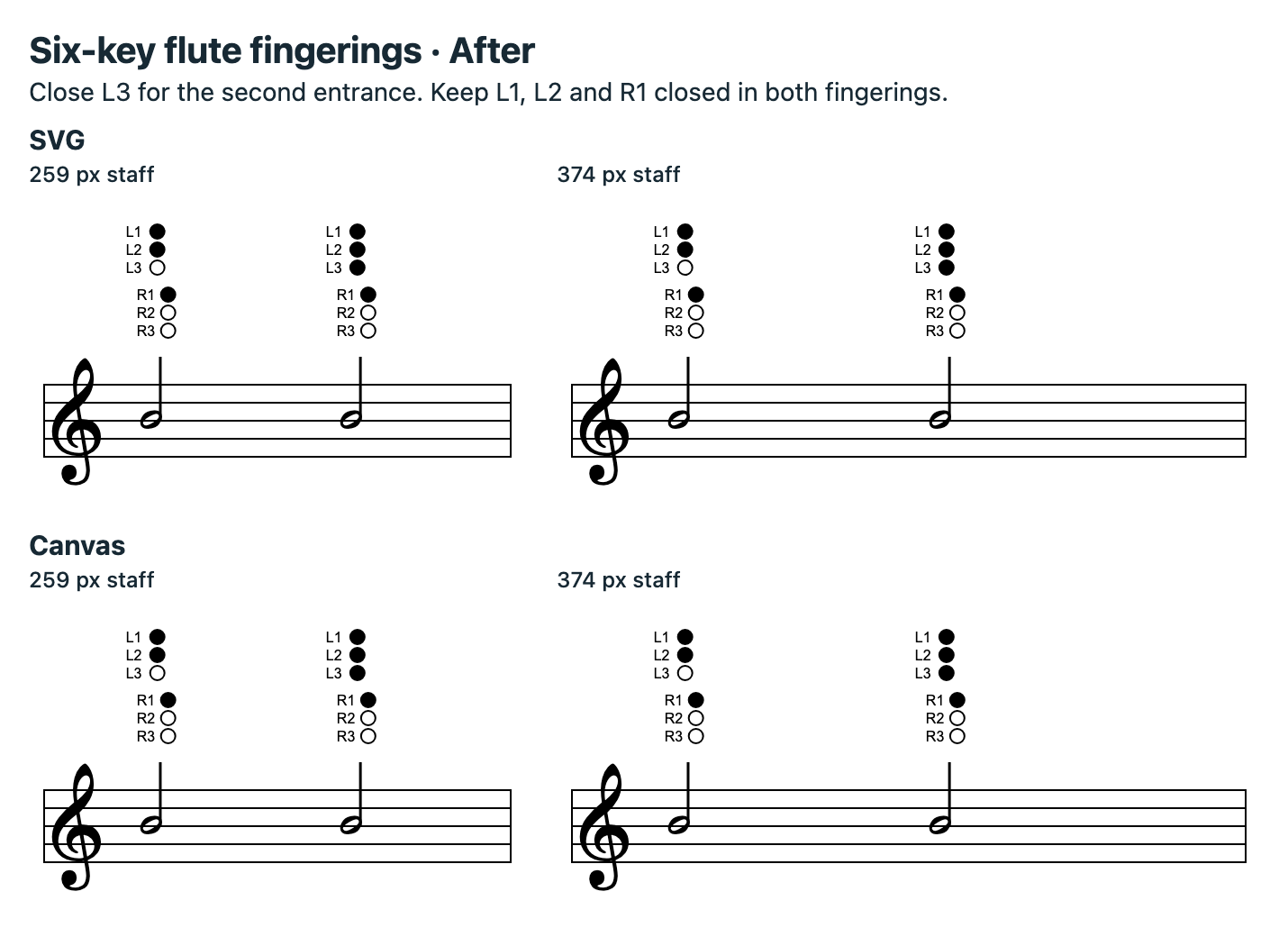
Show open and closed keys in left- and right-hand groups above the notes.
See engraving notes ↗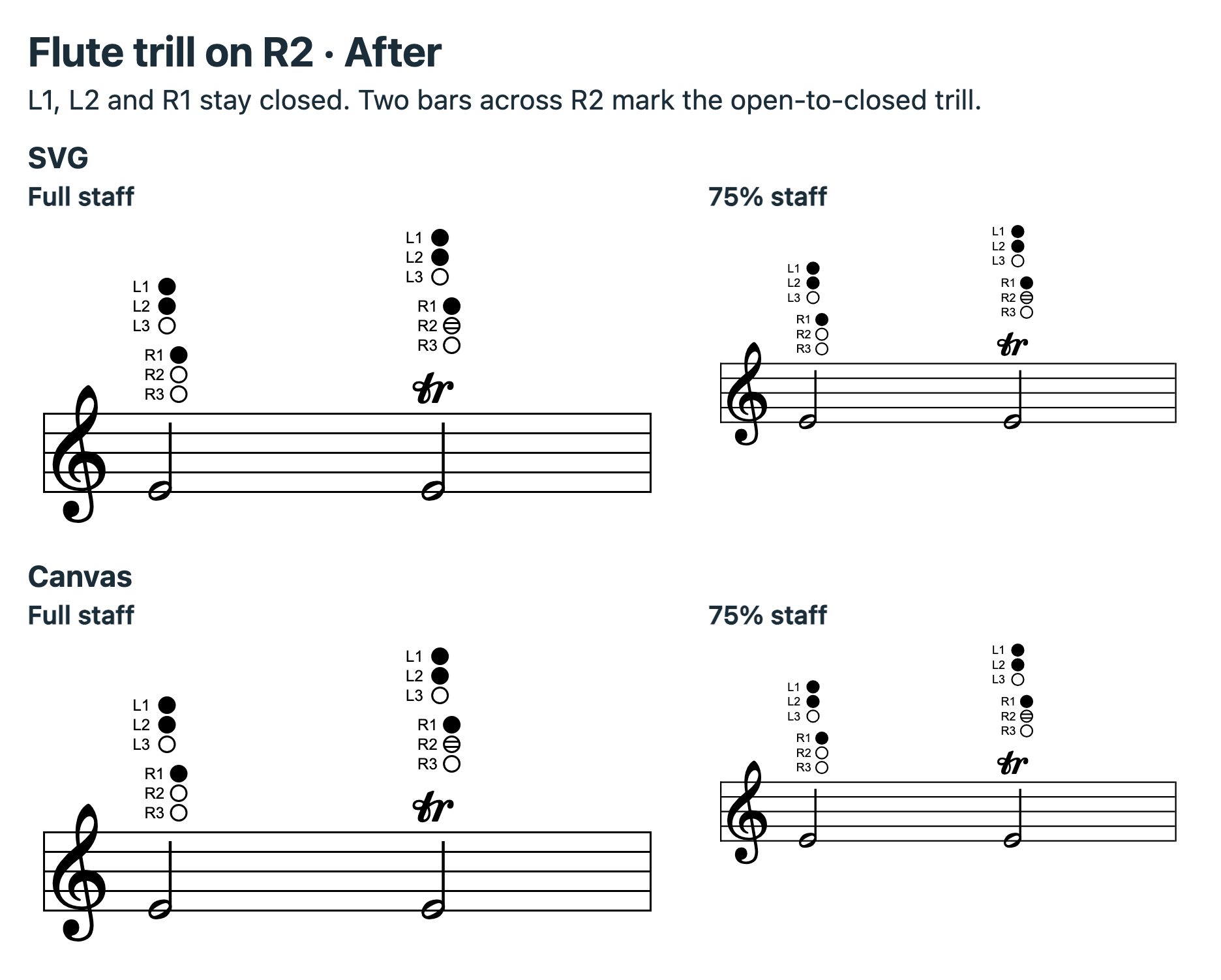
Mark an alternating flute key inside its fingering diagram while the other five retain their open or closed signs.
See engraving notes ↗
Indicate the active reed ranks at the point where the player changes register.
See engraving notes ↗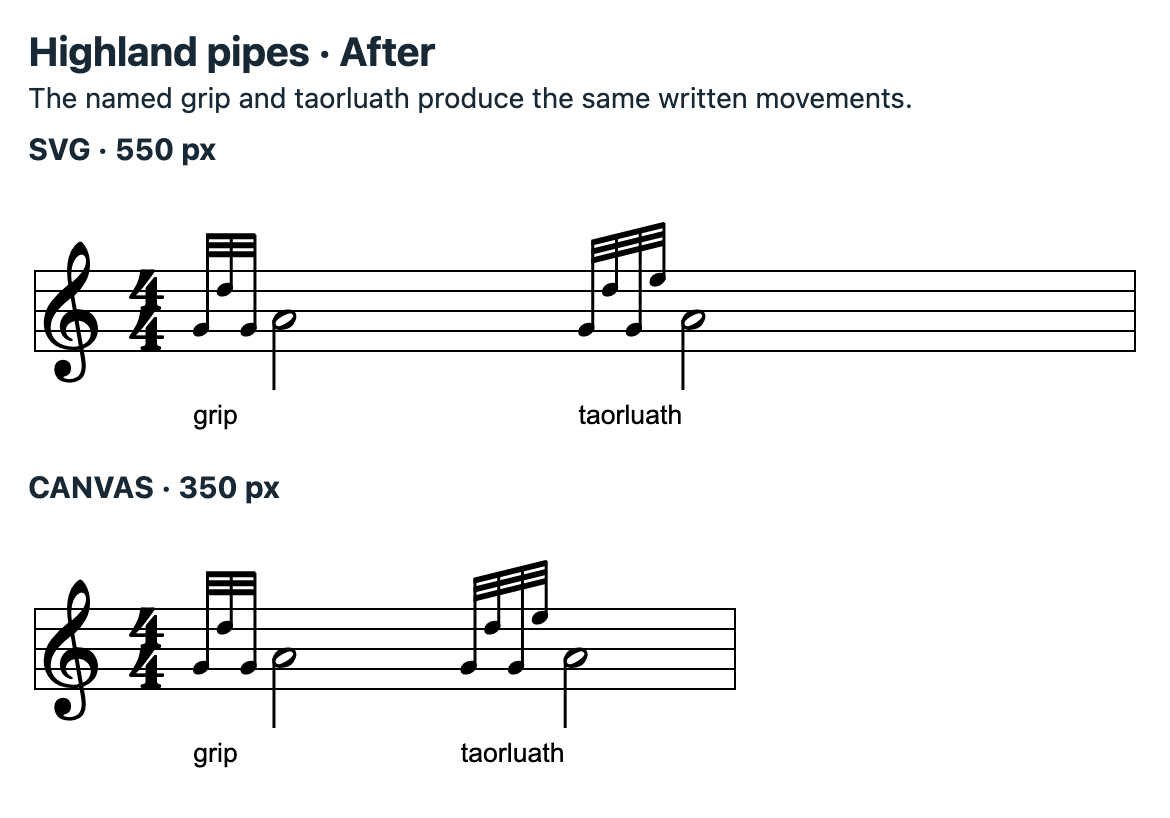
Engrave the grace-note sequence of a grip or taorluath leading into the melody.
See engraving notes ↗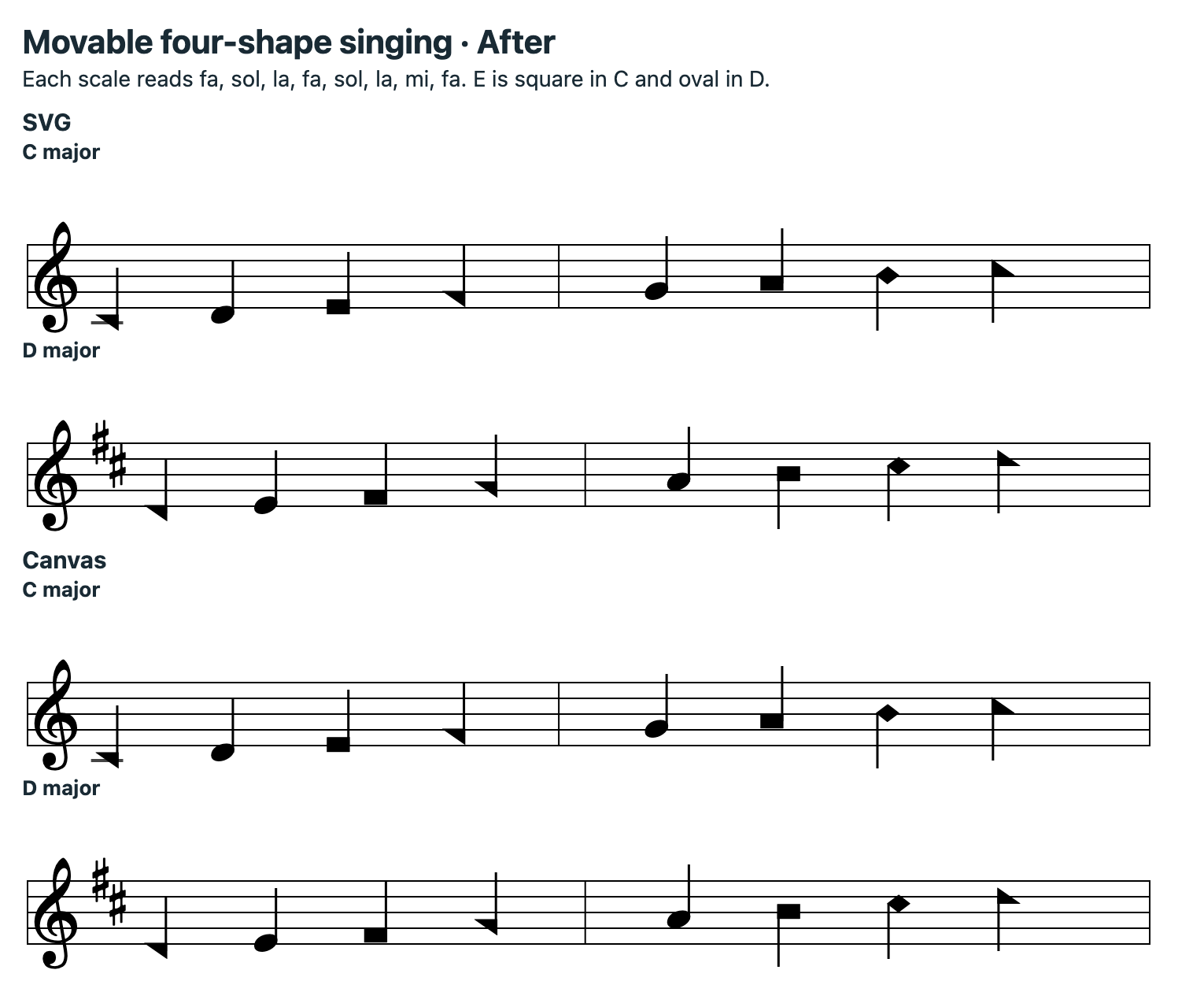
Choose the notehead from the scale degree so the shape follows the tonic when the key changes.
See engraving notes ↗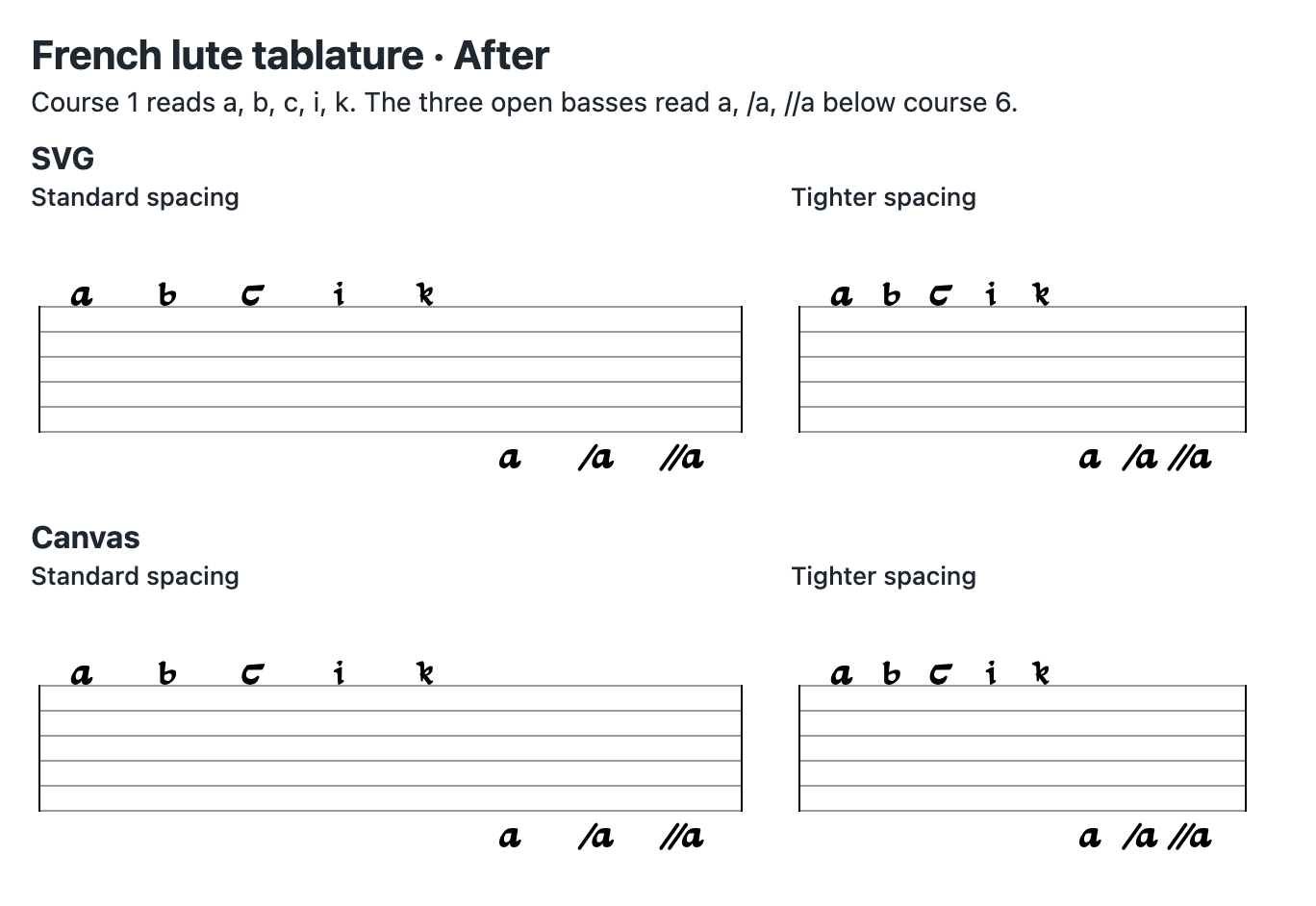
Write fret letters on six courses and mark open bass courses beneath them.
See engraving notes ↗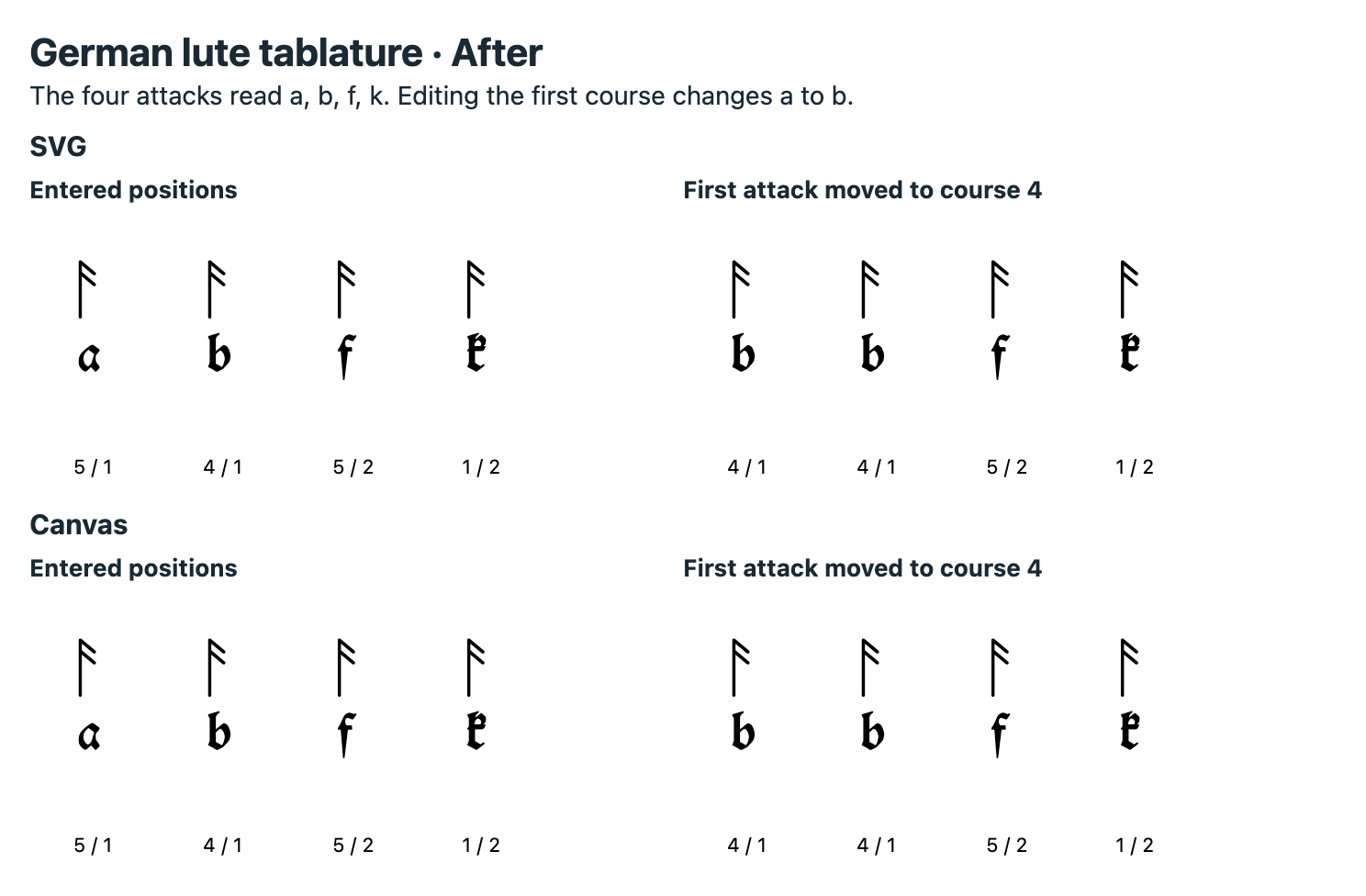
Identify course and fret with a single sign on a staffless row.
See engraving notes ↗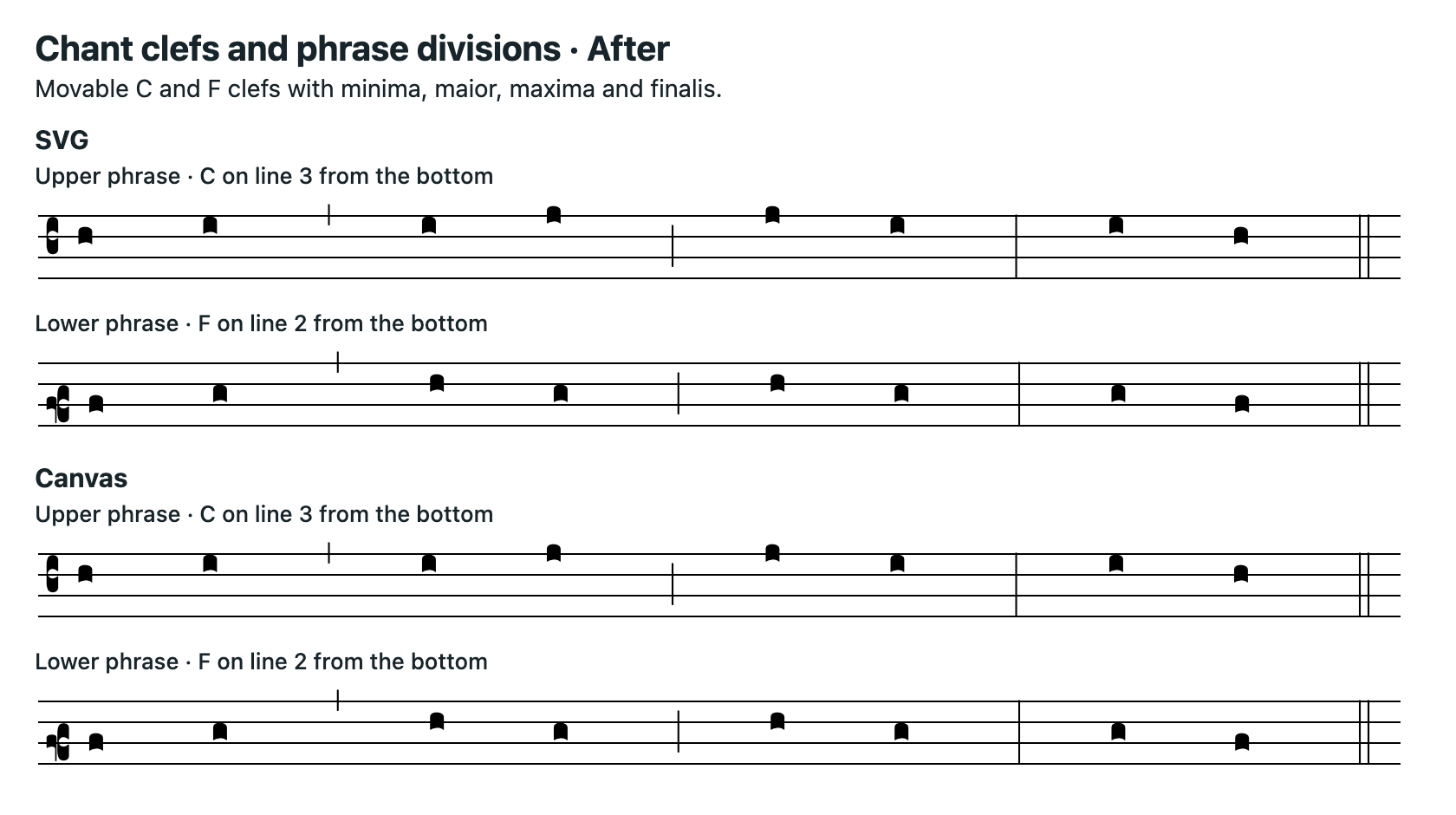
Place C and F clefs on a four-line staff and separate phrases with the four chant divisions.
See engraving notes ↗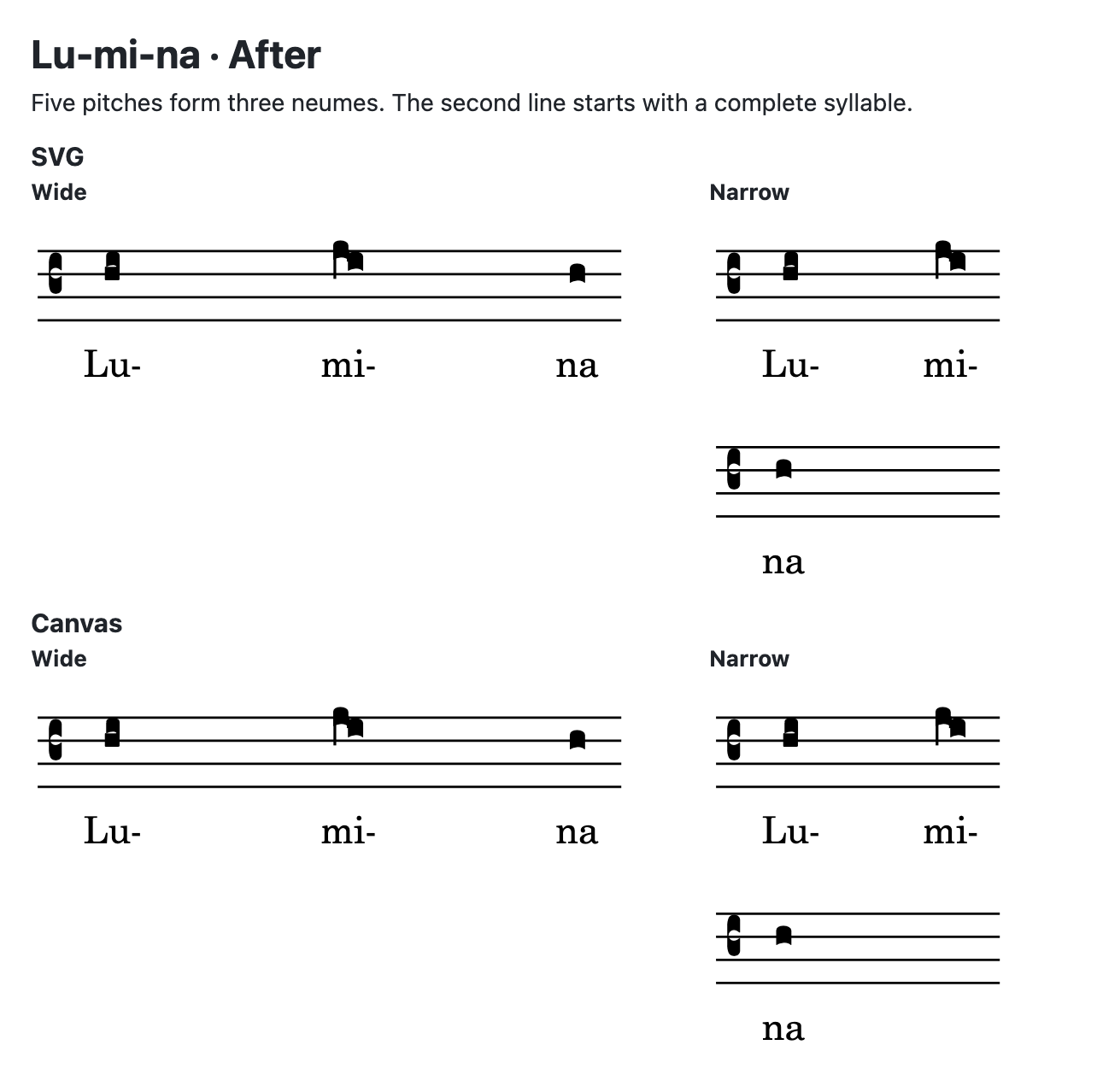
Group the pitches of a podatus or clivis under one syllable on a four-line chant staff.
See engraving notes ↗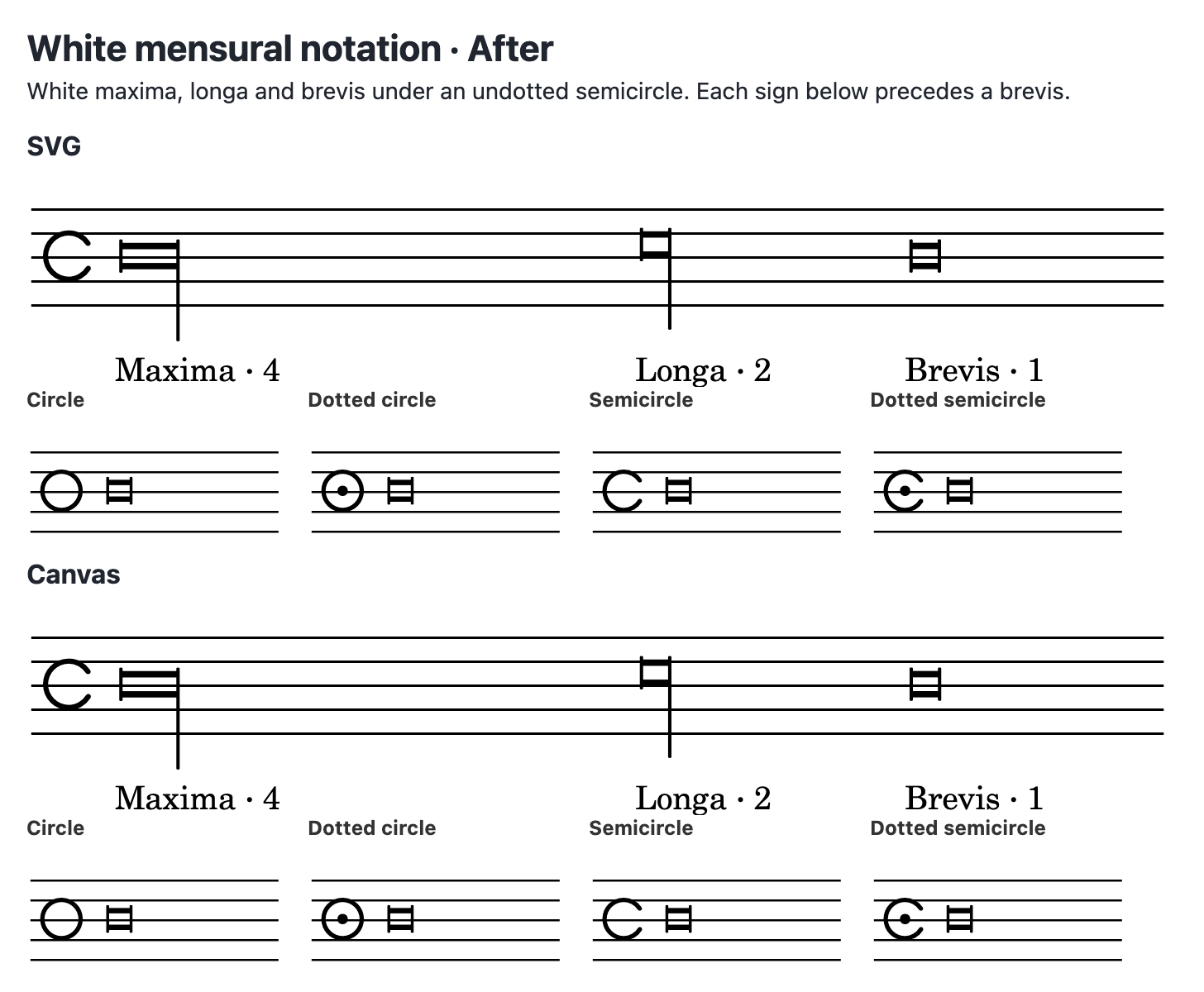
Read maxima, longa and brevis alongside four mensuration signs. The long values keep their written durations.
See engraving notes ↗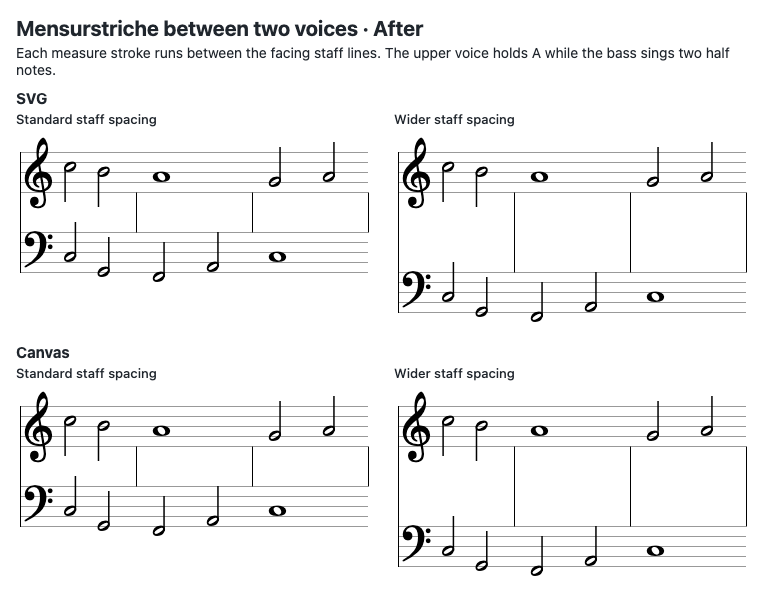
Mark measure boundaries in the gap between staves so each vocal line continues uninterrupted.
See engraving notes ↗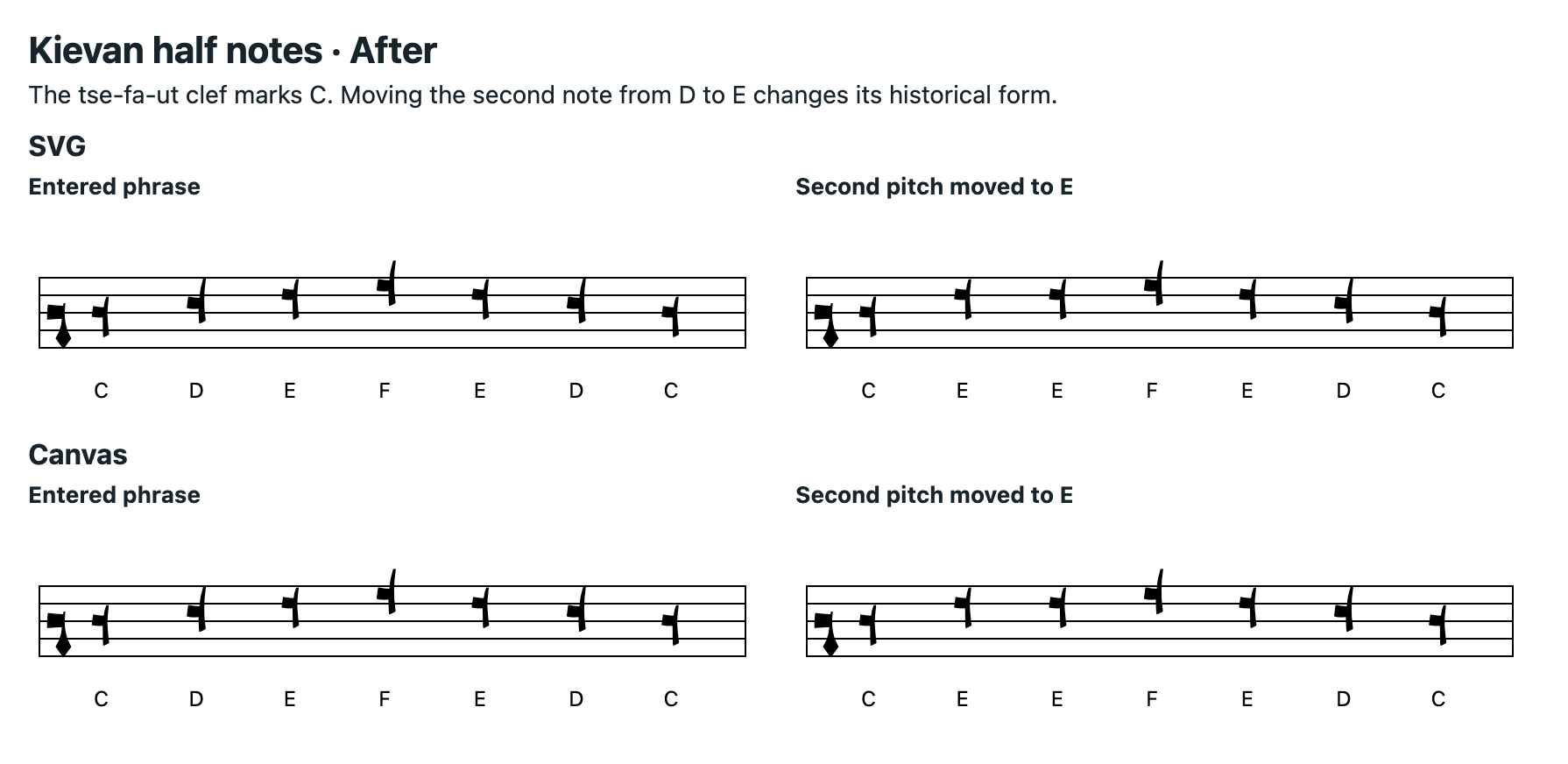
Alternate line and space forms of the half note under a tse-fa-ut clef. Editing the pitch selects the corresponding form.
See engraving notes ↗Try another term or browse all categories.